
Hotels generate significant amounts of waste every day, from leftover food and plastic packaging to discarded toiletries and paper. As operating costs continue to rise and travelers increasingly prefer environmentally responsible stays, waste management in the hotel industry has become more than just a sustainability initiative.
Reducing waste doesn’t just lower disposal costs. It also improves operational efficiency, supports regulatory compliance, strengthens brand reputation, and creates better guest experiences. Whether you manage a boutique hotel, business property, or resort, adopting smarter waste management practices can deliver long-term business and environmental benefits.
In this guide, we’ll explore what hotel waste management is, why it matters, practical strategies to reduce waste, and how hotels can build more sustainable operations.
What Is Hotel Waste Management?
Hotel waste management is the systematic process of minimizing, segregating, recycling, and responsibly handling waste generated across all hotel operations. It includes managing food waste, plastic packaging, paper, glass, textiles, hazardous materials, and other waste streams to minimize environmental impact while improving operational efficiency.
Unlike simple waste disposal, which focuses only on collecting and removing garbage, hotel waste management takes a proactive approach. It aims to reduce waste at the source, encourage reuse and recycling, and implement sustainable practices across every department.
More than a CSR initiative, hotel waste management is an ongoing operational process that requires continuous improvement across every department. It combines people, processes, and responsible waste handling practices to create a cleaner, more efficient, and environmentally responsible hotel operation.
Why Is Hotel Waste Management Important to Hotel Operators?
Effective waste management in hotels boosts efficiency, controls costs, meets guest expectations, and ensures regulatory compliance. A well-planned strategy also strengthens brand reputation and supports long-term sustainability.
Here are some of the key reasons why hotel waste management should be a priority:
- Reduces operating costs: Minimizing food waste, paper consumption, and unnecessary resource use lowers procurement, disposal, and day-to-day operating expenses.
- Meets evolving guest expectations: Many travelers prefer hotels that actively adopt sustainable practices, from reducing single-use plastics to minimizing food waste.
- Supports environmental responsibility: Proper waste segregation, recycling, and composting conserve resources while diverting waste from landfills.
- Ensures regulatory compliance: Following local waste management and plastic waste regulations helps hotels avoid penalties and operate responsibly.
- Strengthens brand reputation: Visible sustainability initiatives help build guest trust, attract environmentally conscious travelers, and differentiate hotels in a competitive market.
The importance of waste management in hotels lies in creating a more resilient operation that balances business performance with environmental responsibility.
What Types of Waste Do Hotels Generate?
Hotels generate a wide variety of waste through daily operations, from guest rooms and restaurants to housekeeping and maintenance. Understanding these waste streams is the first step toward building an effective hotel waste management plan, as each type requires a different approach to reduction, recycling, and disposal.
| Waste Type | Description |
| Food Waste | Includes buffet leftovers, plate waste, expired ingredients, and kitchen preparation scraps. Food waste is one of the largest waste streams in hotels and significantly impacts operational costs. |
| Plastic Waste | Consists of single-use water bottles, toiletry containers, food packaging, plastic cutlery, and other disposable items commonly used in guest rooms and dining areas. |
| Paper Waste | Includes invoices, receipts, brochures, menus, office documents, and promotional materials. Many hotels reduce paper waste by adopting digital systems and paperless operations. |
| Glass Waste | Generated from beverage bottles, jars, and broken glassware used in restaurants, bars, and guest rooms. Most glass waste can be recycled when properly segregated. |
| Textile Waste | Covers worn-out bed linen, towels, curtains, uniforms, and upholstery that require replacement due to wear and tear or damage. |
| E-waste | Includes discarded electronic equipment such as televisions, computers, batteries, cables, routers, and other electrical devices that require specialized disposal. |
| Hazardous Waste | Comprises cleaning chemicals, paints, fluorescent lamps, solvents, and other materials that require careful handling to protect people and the environment. |
| Sanitary Waste | Refers to hygiene products and bathroom waste generated by guests and staff, which must be segregated and disposed of according to local health and safety regulations. |
Waste generation varies based on property size, amenities, and guest profiles. Resorts with multiple restaurants produce more food waste, while business hotels generate more paper and packaging waste from meetings and events.
What Causes Waste in Hotels?
Waste in hotels is generated at almost every stage of daily operations, from food preparation and housekeeping to guest activities and large-scale events. Identifying the root causes helps hotels reduce unnecessary waste, lower operational costs, and build a more effective waste management strategy.
Some of the most common causes include:
- Food preparation and kitchen waste: Excess trimming, overproduction, and expired ingredients often result in significant food waste before meals even reach guests.
- Buffet overproduction: To maintain fully stocked buffet counters, hotels frequently prepare more food than required, leading to large quantities of leftovers.
- Overstocking and poor inventory management: Purchasing more supplies than needed or failing to rotate stock properly can result in expired food, damaged materials, and unnecessary waste.
- Disposable guest amenities: Single-use toiletries, plastic water bottles, disposable slippers, and packaging contribute significantly to plastic waste, particularly in high-occupancy properties.
- Poor waste segregation: Mixing recyclable, compostable, and general waste makes recycling difficult and increases the amount of waste sent to landfills.
- Guest behaviour: Leaving lights and appliances on, wasting food, or using disposable items unnecessarily can increase a hotel’s overall waste generation.
- Banquets and events: Weddings, conferences, and large social gatherings often generate high volumes of food waste, decorations, packaging, and single-use products. This is particularly relevant for hotels in India, where banquet business contributes significantly to revenue.
- Seasonal demand fluctuations: During peak travel seasons, hotels often increase inventory and food production to meet demand, which can lead to excess waste if occupancy falls short of expectations.
While some waste is unavoidable, much of it can be reduced through better planning, staff awareness, and operational processes.
Best Practices for Hotel Food Waste Management
Food waste is one of the largest waste streams in hotels and can significantly increase procurement and disposal costs. Reducing food waste not only supports sustainability but also lowers procurement costs, minimizes disposal expenses, and improves kitchen efficiency.
Some effective practices include:
- Identify major food waste sources: Monitor where food waste occurs most frequently, whether from buffet leftovers, kitchen preparation, expired ingredients, or banquet surplus, to identify areas for improvement.
- Improve inventory planning: Forecast demand accurately, monitor stock levels regularly, and follow the First In, First Out (FIFO) method to reduce spoilage and unnecessary purchases.
- Optimize portion sizes: Review serving sizes based on guest preferences to reduce plate waste while maintaining a positive dining experience.
- Manage buffets efficiently: Prepare food in smaller batches and replenish buffet stations based on demand instead of overproducing during service.
- Compost organic waste: Compost unavoidable food waste wherever feasible to divert biodegradable waste from landfills and support responsible disposal practices.
- Donate surplus food: Partner with authorized food recovery organizations to safely donate excess edible food, subject to local regulations and food safety guidelines.
By adopting these practices, hotels can significantly reduce food waste while improving operational efficiency, lowering costs, and supporting their sustainability goals.
Which Department Is Responsible for Hotel Waste Management?
Hotel waste management is a shared responsibility across multiple departments, not just one team. While hotel management defines policies and goals, each department plays a role in reducing waste through its daily operations.
| Department | Key Responsibilities |
| Housekeeping | Segregate guest room waste, reduce the use of disposable amenities, manage linen reuse programs, and ensure proper disposal of sanitary waste. |
| Kitchen & F&B | Minimize food waste through portion control, inventory management, buffet planning, and proper disposal of organic waste. |
| Engineering & Maintenance | Safely handle hazardous waste, manage e-waste disposal, maintain water-saving systems, and monitor utility consumption. |
| Procurement | Source sustainable products, reduce excess packaging, purchase reusable alternatives, and work with environmentally responsible suppliers. |
| General Manager & Hotel Management | Establish waste management policies, allocate resources, monitor compliance, and promote sustainability across the hotel. |
Clearly defining responsibilities helps hotels implement waste management practices more consistently and effectively.
How to Create a Hotel Waste Management Plan: Step-by-Step Process
Understanding the importance of waste management in hotels is one thing; implementing it effectively requires a structured plan. The following steps can help hotels build a practical waste management system and continuously improve performance.
Step 1: Conduct a Waste Audit
Assess the types and quantity of waste generated across your property over a specific period. A waste audit helps identify major waste streams, understand current disposal practices, and establish a baseline for measuring future improvements.
Step 2: Identify Major Waste Sources by Department
Review how different departments contribute to waste generation. For example, kitchens may produce food waste, housekeeping may generate plastic and sanitary waste, while engineering handles hazardous and e-waste. Identifying these sources helps assign responsibilities more effectively.
Step 3: Set Measurable Waste Reduction Goals
Establish realistic and measurable objectives based on your audit findings. These could include reducing food waste by a certain percentage, cutting paper consumption, or increasing recycling rates within a defined timeframe.
Step 4: Implement Waste Segregation and Recycling
Introduce clearly labelled waste bins and standard operating procedures for separating organic, recyclable, hazardous, and general waste. Partner with authorized recycling agencies or waste management providers to ensure responsible disposal.
Step 5: Train Staff and Engage Guests
Educate employees on waste segregation, food handling, and sustainable operating practices through regular training sessions. At the same time, encourage guests to participate through initiatives such as linen reuse programs, refillable amenities, or clearly communicated recycling practices.
Step 6: Monitor Performance and Improve Continuously
Track key performance indicators (KPIs) regularly to evaluate progress and identify opportunities for improvement. Useful KPIs include food waste generated per guest, recycling rate, waste diversion rate, paper consumption, and waste disposal costs.
Key Takeaway
An effective hotel waste management plan isn’t a one-time project. Regular audits, staff engagement, clear ownership, and continuous monitoring are essential for achieving long-term cost savings and sustainability goals.
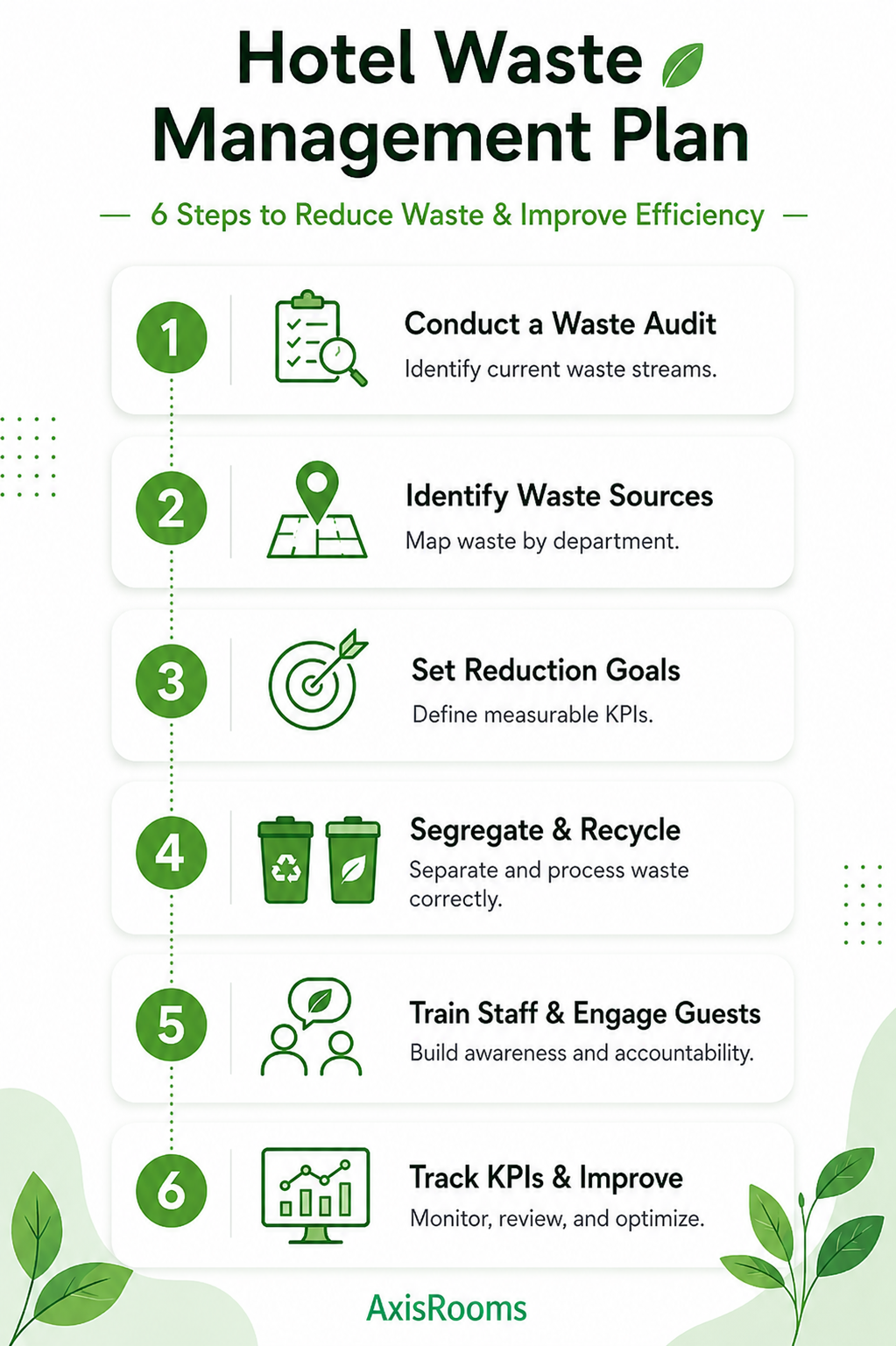
Figure: A simple six-step hotel waste management plan to help hotels reduce waste, improve operational effectiveness, and support long-term sustainability.

Manage All Your OTAs from One Place
Request a DemoHotel Waste Management Rules and Regulations in India
Hotels in India must comply with various waste management regulations to ensure responsible waste handling and disposal. While the legal requirements may vary by state and local authorities, the following national rules are the most relevant for hotel operators.
| Regulation | What It Means for Hotels |
| Solid Waste Management (SWM) Rules, 2016 | Hotels must segregate waste at source, ensure proper collection, and dispose of waste through authorized agencies. |
| Plastic Waste Management Rules, 2016 | Reduce the use of single-use plastics and ensure plastic waste is collected, stored, and handed over to authorized recyclers. |
| Bulk Waste Generator Requirements | Larger hotels may be classified as bulk waste generators and are responsible for managing their waste, including processing organic waste where applicable. |
| Four-Way Waste Segregation | Waste should be separated into wet, dry, domestic hazardous, and sanitary waste before disposal. |
| On-Site Composting | Hotels generating significant quantities of organic waste may be encouraged or required by local authorities to compost biodegradable waste on-site or through authorized facilities. |
What This Means for Hotel Owners
Rather than viewing these regulations as compliance requirements alone, hotels can use them to build more efficient and sustainable operations.
- Establish clear waste segregation practices across all departments to simplify recycling and disposal.
- Review local municipal requirements to understand whether your property qualifies as a bulk waste generator.
- Reduce reliance on single-use plastics by adopting reusable or eco-friendly alternatives wherever possible.
- Maintain records of waste disposal and recycling to demonstrate compliance during inspections or audits.
- Train employees regularly so that waste management practices are followed consistently across the property.
What Are the Most Common Hotel Waste Management Mistakes?
Even hotels with good intentions can struggle to reduce waste if their waste management strategy lacks planning, accountability, or consistent execution. Avoiding these common mistakes can help improve operational efficiency, reduce disposal costs, and support long-term sustainability goals.
Some of the most common mistakes include:
- Skipping a waste audit: Without understanding what types of waste are generated and where they originate, it’s difficult to identify improvement opportunities or measure progress.
- Poor waste segregation: Mixing recyclable, organic, hazardous, and general waste reduces recycling efficiency and can increase disposal costs.
- Undefined ownership: When no department or individual is responsible for waste management, initiatives often lose momentum and accountability.
- Ignoring banquet and event waste: Weddings, conferences, and large events can generate significant food and packaging waste, yet many hotels fail to include them in their waste reduction plans.
- Treating staff training as a one-time activity: Waste management practices evolve over time, making regular refresher training essential for maintaining consistency.
- Not involving guests: Simple initiatives such as linen reuse programs, refillable amenities, or clearly labelled recycling bins can encourage guests to participate in a hotel’s sustainability efforts.
Addressing these issues helps hotels strengthen their waste management strategy while reducing costs and improving compliance.
How AxisRooms Helps Hotels Build More Efficient and Sustainable Operations
Hotel waste management goes beyond food waste and recycling. By digitizing reservations, distribution, and operational workflows, AxisRooms helps hotels streamline operations while supporting broader sustainability goals through paperless processes.
- 100+ OTA Integrations: Synchronize inventory, rates, and availability across multiple online travel agencies, reducing manual updates and improving distribution efficiency.
- PMS Integrations: Connect reservations and operational data effortlessly, minimizing duplicate processes and supporting paperless hotel operations.
- Payment Gateways: Enable secure digital payments while encouraging electronic invoices and receipts, reducing paper usage during guest transactions.
- Channel Manager: Centralize inventory and rate management across all booking channels from a single dashboard, improving operational efficiency and reducing manual intervention.
- Revenue Management Services: Support smarter pricing decisions through demand insights and automated revenue optimization, helping hotels maximize profitability with fewer manual processes.
- Web Booking Engine: Drive commission-free direct bookings through your hotel website, offering guests a seamless digital booking experience while reducing paperwork associated with manual reservations.
By replacing manual processes with connected digital workflows, AxisRooms helps hotels improve efficiency while taking small but meaningful steps toward more sustainable operations.
Conclusion
Effective hotel waste management is about more than reducing waste; it helps hotels lower operating costs, improve regulatory compliance, streamline daily operations, and meet growing guest expectations around sustainability. Small, consistent improvements, from better waste segregation to digital workflows, can create lasting operational and environmental benefits.
With the right processes and technology in place, hotels can build more efficient and sustainable operations. Book a free demo today to discover how AxisRooms can help simplify hotel operations and support your sustainability goals.