


Axisrooms: Boost Online Sales, Drive Occupancy, Maximise Revenue!
Adopt our Hotel Channel Manager to drive OTA sales, Hotel Booking Software to generate incremental direct sales via your website, and Revenue Management System to boost profitability.
25,000+Hotels
750K+Rooms
30,000+Daily Bookings Processed
Our Clients

















Our Products
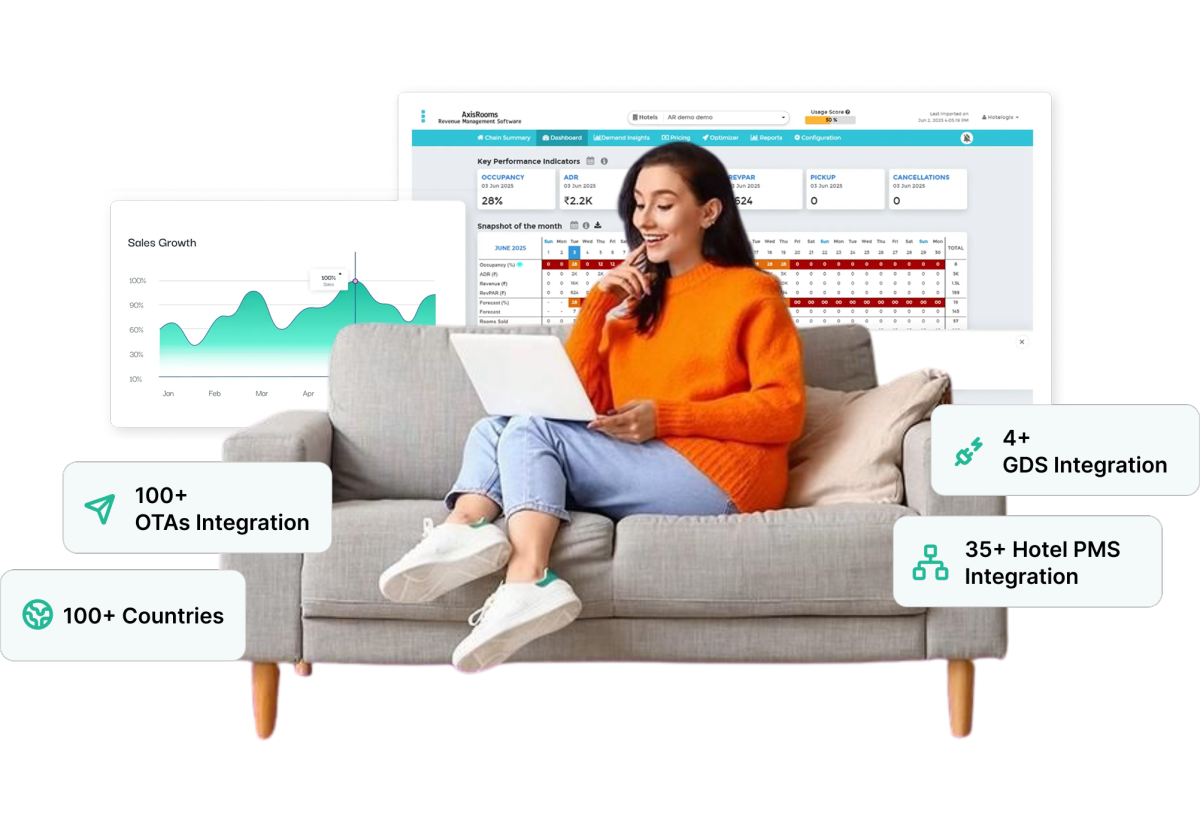
Unlike disconnected hotel tech platforms that force you to juggle multiple vendors, AxisRooms brings online distribution, direct bookings and revenue management into one place.
Hotel Channel Manager
Sell more via multiple OTAs
- Push rates/availabilities to OTAs in real-time, ensure rate parity
- Boost online visibility through OTAs
- Eliminate overbookings, build guest trust
Drive OTA sales by up to 35%.
Hotel Booking Engine
Capture more direct bookings via your website
- Save big on OTA commission fee, boost RevPAR
- Gain control over guest details for targeted marketing
- Enhance occupancy with fewer cancellations and a 24/7 secure reservation process
Boost direct bookings by about 20%.
Hotel Revenue Management System
Maximise revenue by selling the right room at the right price, every time.
- Sell at optimal rates based on demand, seasonality, and booking trends
- Know competition rates and adjust your pricing accordingly
- Gain insights via reports and improve revenue planning
Boost hotel revenue by about 30%.
Who is this for

Hotel Owners/Directors
Pain point
Juggling disparate systems from multiple vendors, no single view of critical KPIs.
Solutions
Hotel channel manager, hotel booking software, revenue management system - all 3 operationally-imperative solutions from one vendor.
Benefits
View KPIs, reports, know what's working and what's not, make informed decisions.

General Managers / Operations Heads
Pain point
Lack of automation leading to operational overload and errors.
Solutions
OTA distribution to revenue management - everything is automated/synced in real-time with hotel management software.
Benefits
Save a significant amount of time daily, boost operational efficiencies and serve guests better.

Revenue Managers/Sales Managers
Pain point
Static pricing, no clarity into demand/competition rates, missed revenue opportunities.
Solutions
AI-powered dynamic pricing, plus smart distribution tools.
Benefits
Sell more rooms at optimised rates, boost occupancy and revenue.
What Our Customers Say

“AxisRooms Channel Manager tool was the natural choice as it has all the features and functionalities that let us ensure real-time distribution across multiple OTAs. It comes with a Mobile App, enabling us to manage our sales channels on the go. Plus, it is extremely user-friendly. It saves us 90% of our time daily."
Neeraj Raj, Revenue Manager of The Foxoso Group of Hotels
Know more
“AxisRooms revenue management system dynamically adjusts our rates based on accurate forecasts, seasonality, guest segments, and booking windows, leading to improved sales, occupancy, and revenue.”
Vineeth John, Senior Manager - E-Commerce, CGH Earth Hotel Group
Know more
"At the core, we are a tech-enabled brand. Adopting AxisRooms Channel Manager is a strategic move for us, paving the way for unparalleled efficiency in distribution, razor-sharp pricing strategies, and improved presence across all online booking platforms. In short, it is all about unlocking the full potential of our inventory, up to the last minute."
Sneha Choudhry, Co-founder of Zolostays
Know more
Before vs After AxisRooms
Most hotels consider AxisRooms after running on fragmented hotel software systems – a patchwork of disconnected tools that restrict them from selling more online to drive occupancy and revenue.
Before
Error-prone manual updates, wasted hours syncing rates and inventory across OTAs
Weak OTA visibility, lower sales, poor occupancy, and shrinking revenue
Overbookings, damaged guest trust and a tarnished reputation
Minimal direct bookings, reduced RevPAR and zero control over guest data
Static pricing and no competitive insights, missed chances to maximise revenue
Fragmented hotel software systems from multiple vendors, no integration, no single view
After
Automated rate/inventory sync across OTAs saves hours and eliminates errors
️Strong OTA visibility drives sales, occupancy, and revenue
️Accurate availability prevents overbookings, protecting guest trust and brand reputation
Enhanced direct bookings boost RevPAR and give you full control over guest data
Dynamic, competitor-aware pricing allows for selling at the best rates to maximise profitability
One complete hotel management system for channel manager, hotel booking software and revenue tools, all unified
Get Started
Claim your free demo and see how much you can grow online sales
Fill in your details and our team will get in touch with the right next step for your property.
Industry Recognitions
We help hotels sell more via online sales channels with our strategic partnerships with industry leaders. We have earned industry-wide recognition, too







FAQs
AxisRooms is a cloud-based hospitality technology provider offering Hotel Channel Manager, Booking Engine, Revenue Management Software, and Rate Shopper. Trusted by over 25,000+ Hotels in 100+countries, AxisRooms’ solutions help hotels increase hotel revenue
AxisRooms provides a robust solution for hoteliers to manage their online distribution, increase their online presence, and optimize their pricing strategy. It leverages the power of the cloud to help accelerate your hotel business.
Hotels – both independent and groups looking to ensure efficient online distribution to sell more via OTAs, their websites, and social media pages are using AxisRooms. Additionally, a growing number of hotels looking to drive revenue by selling more rooms at the best rates are also using AxisRooms.
Please get in touch with us directly for detailed pricing information. https://www.axisrooms.com/request-demo/
Yes. It integrates with several leading third-party solutions, including OTAs, metasearch engines, GDSs, Hotel PMSs, and many more, to help hotels work with preferred/existing solutions. Know more: https://www.axisrooms.com/integrations/
Bengaluru, Karnataka