

• Home
  • Products
    • Hotel Channel Manager
    • Revenue Management Service
    • Hotel Booking Engine
    • Hotel Revenue Management System
  • Company
    • About Us
    • Partners and Investors
    • Careers
    • News/Media
    • Reviews
    • Support
    • Contact Us
  • Integrations
  • Resources
    • Blogs
    • Ebooks
    • Case Studies
    • Guide
  • Login
    • Channel Manager
    • Booking Engine
    • Revenue Management System
  • Pricing
  • Request Demo
sales@axisrooms.com
support@axisrooms.com
Support: +91 8061914800
AxisRooms AxisRooms
AxisRooms AxisRooms
  • Home
  • Products
    • Hotel Channel Manager
    • Revenue Management Service
    • Hotel Booking Engine
    • Hotel Revenue Management System
  • Company
    • About Us
    • Partners and Investors
    • Careers
    • News/Media
    • Reviews
    • Support
    • Contact Us
  • Integrations
  • Resources
    • Blogs
    • Ebooks
    • Case Studies
    • Guide
  • Login
    • Channel Manager
    • Booking Engine
    • Revenue Management System
  • Pricing
  • Request Demo
  • Pricing
  • Request Demo

Types of Hotels: The Complete Guide to Hotel Categories, Classifications and Examples

Home Types of Hotels: The Complete Guide to Hotel Categories, Classifications and Examples

Types of Hotels: The Complete Guide to Hotel Categories, Classifications and Examples

TL;DR
Hotels can be classified in many ways, but choosing the right hotel category is ultimately about positioning. Understanding where your property fits helps shape guest expectations, pricing, marketing, and long-term growth.

Summarize this blog post with:

ChatGPT Perplexity Claude Grok

From luxury resorts in Bali and business hotels in Singapore to heritage palaces in Rajasthan and boutique hotels in Paris, hotels come in many different forms. Each type is designed to serve a specific guest need, travel purpose, and experience.

Understanding the different types of hotels and hotel categories is important for both travelers and hoteliers. For guests, it helps set expectations around pricing, services, and facilities. For hotel owners, it influences positioning, marketing, distribution strategy, and revenue opportunities.

In this guide, we’ll explore hotel classification systems, the most common hotel categories worldwide, and the different types of hotels in India, along with examples and practical insights for modern hoteliers.

What Are the Types of Hotels?

Types of hotels are categories used to classify properties based on factors such as location, service level, target guests, ownership model, and purpose of stay. Common examples include resorts, business hotels, boutique hotels, heritage hotels, airport hotels, and budget hotels.

Hotel categories exist because different travelers want different experiences. A business traveler may care most about convenience and speed, while a leisure guest may look for comfort, design, or recreation. For hotel owners, understanding hotel classification helps define market positioning, pricing strategy, distribution channels, and service standards.

Read Also – What Is a Destination Management Company (DMC)? Benefits, Types & Hotel Partnerships in India

How Are Hotels Classified? The 6 Key Lenses

Hotels are classified using several criteria, but most hospitality professionals rely on six key lenses to categorize properties. These classifications help guests know what to expect and help hoteliers position their properties more effectively.

  • Size: Classifies hotels based on the number of rooms, ranging from small boutique properties to large convention hotels.
  • Star Rating: Measures service standards, facilities, amenities, and overall guest experience.
  • Location: Groups hotels by setting, such as city-center hotels, airport hotels, resorts, or beachfront properties.
  • Target Guest Segment: Classifies hotels by the travelers they serve, such as business, leisure, family, wellness, or extended-stay guests.
  • Ownership & Affiliation: Identifies whether a hotel is independent, part of a chain, franchised, or managed by a brand.
  • Theme & Length of Stay: Covers concept-led and stay-based categories such as heritage hotels, eco hotels, wellness resorts, and extended-stay properties.
Read Also – Difference Between Channel Manager vs PMS and Why You Need Both Hotel PMS and Channel Manager?

Classification by Size

One of the most common ways to classify hotels is by the number of rooms they operate. Property size often influences staffing requirements, operational complexity, guest experience, and revenue potential.

  • Small Hotels: Typically up to 50 rooms, offering a more personalized and intimate guest experience. Many boutique hotels, homestays, and independent properties fall into this category.
  • Medium Hotels: Usually between 51 and 150 rooms, balancing operational efficiency with personalized service. This segment includes many city hotels and regional hotel brands.
  • Large Hotels: Generally ranging from 151 to 300 rooms, with multiple facilities such as restaurants, meeting spaces, and recreational amenities.
  • Mega Hotels: Properties with more than 300 rooms, often designed to accommodate large volumes of leisure, business, and group travelers. 


Examples in India: Boutique heritage hotels and havelis often fall into the small hotel category, while large business hotels, convention properties, and integrated resorts are usually classified as large or mega hotels.

Classification by Star Rating (Including India’s Official System)

Star ratings are one of the most widely used hotel classification systems. They help guests understand the level of comfort, facilities, and service they can expect before booking. 

In India, hotel classifications are overseen by the Hotel & Restaurant Approval & Classification Committee (HRACC) under the Ministry of Tourism, which classifies hotels through both star ratings and a separate heritage hotel category for historically significant properties.

Star Rating Typical Characteristics
1-Star Basic accommodation with limited facilities and services
2-Star Essential amenities with a focus on affordability
3-Star Comfortable rooms with standard services and business-friendly facilities
4-Star Enhanced amenities, multiple dining options, and higher service standards
5-Star Luxury accommodation with premium facilities and personalized service
5-Star Deluxe Exceptional luxury, world-class amenities, and highly personalized guest experiences

Heritage Hotel Classification in India

India also follows a separate classification system for heritage hotels, which are often converted palaces, forts, havelis, and historic residences.

  • Heritage Basic: Historic properties that preserve architectural character while offering essential guest facilities.
  • Heritage Classic: Heritage hotels with upgraded amenities, better infrastructure, and a stronger guest experience.
  • Heritage Grand: Premium heritage properties that combine historical significance with luxury hospitality standards and extensive facilities.


Popular examples include palace hotels in Rajasthan, restored havelis, and heritage properties that showcase India’s cultural and architectural legacy.

Read Also – Hotel Departments and Their Functions: A Complete Guide for Hoteliers 

How Many Types of Hotels Are There?

Diffrent-type-of-hotel.

There is no single fixed number of hotel types. However, most hospitality experts classify hotels into 15–25 major categories based on size, location, target market, ownership model, service level, and purpose of stay.

Figure: Major hotel categories can be grouped into international hotel types, India-specific hotel types, and emerging accommodation types.

The Complete List of Hotel Types (With Examples)

The hospitality industry encompasses various accommodation types, including luxury resorts, business hotels, heritage hotels, homestays, glamping sites, and houseboats. 

Below is a comprehensive list of hotel types, along with their definitions, examples, and the guest segments they are best suited for.

Popular International Hotel Types

Globally, hotels are classified by target guest, service offering, and travel purpose. These are some of the most widely recognized types across hospitality markets.

  • Resort Hotel

A resort hotel is a property designed primarily for leisure travelers, offering accommodation alongside recreational facilities such as pools, spas, golf courses, beaches, or adventure activities.

Example: Atlantis The Palm, Dubai

Ideal For: Families, couples, vacationers, and leisure travelers seeking an all-inclusive experience.

  • Business Hotel

A business hotel is designed to serve corporate travelers and typically offers convenient locations, meeting spaces, high-speed internet, and business-friendly amenities.

Example: JW Marriott Hotel New Delhi Aerocity

Ideal For: Business travelers, corporate teams, and conference attendees.

  • Luxury Hotel

A luxury hotel provides premium accommodation, personalized service, upscale dining, and high-end facilities designed to deliver an exceptional guest experience.

Example: Burj Al Arab, Dubai

Ideal For: High-net-worth travelers, luxury seekers, and special-occasion guests.

  • Boutique Hotel

A boutique hotel is a smaller property known for its distinctive design, personalized service, and unique character rather than standardized experiences.

Example: The Henrietta Hotel, London

Ideal For: Travelers seeking authentic, stylish, and personalized stays.

  • Budget Hotel

A budget hotel focuses on providing clean, comfortable accommodation at affordable prices while offering essential facilities and services.

Example: ibis Budget Hotels

Ideal For: Budget-conscious travelers, backpackers, and short-stay guests.

  • Motel

A motel is a roadside accommodation property designed primarily for motorists, usually offering convenient parking and easy access to highways.

Example: Motel 6, United States

Ideal For: Road trippers, transit travelers, and short overnight stays.

  • Airport Hotel

An airport hotel is located near an airport and caters to travelers with layovers, delayed flights, or early departures.

Example: Hilton London Heathrow Airport

Ideal For: Transit passengers, airline crews, and business travelers.

  • Extended Stay Hotel

An extended stay hotel offers apartment-style accommodation with kitchen facilities and services suited to longer stays.

Example: Residence Inn by Marriott

Ideal For: Relocating professionals, project teams, and long-stay guests.

  • Convention Hotel

A convention hotel is designed to host meetings, exhibitions, conferences, and corporate events through large event facilities.

Example: Gaylord Opryland Resort & Convention Center

Ideal For: Conference delegates, corporate groups, and event organizers.

  • Casino Hotel

A casino hotel combines accommodation with on-site gaming, entertainment, restaurants, and nightlife experiences.

Example: Bellagio Las Vegas

Ideal For: Leisure travelers, gaming enthusiasts, and entertainment-focused guests.

  • Eco Hotel

An eco-hotel is built around sustainable practices such as energy efficiency, waste reduction, water conservation, and environmentally responsible operations.

Example: Six Senses Resorts

Ideal For: Environmentally conscious travelers and sustainability-focused guests.

  • Capsule Hotel

A capsule hotel offers compact sleeping pods instead of traditional rooms, maximizing space while keeping accommodation affordable.

Example: Nine Hours, Tokyo

Ideal For: Solo travelers, budget travelers, and short-stay guests.

  • Serviced Apartment

A serviced apartment combines hotel-style services with residential-style living spaces, including kitchens, living areas, and housekeeping support.

Example: Oakwood Premier

Ideal For: Families, business travelers, expatriates, and long-stay guests.

India-Specific Hotel Types

When discussing types of hotels in India, categories such as heritage hotels, palace hotels, homestays, pilgrimage hotels, and wellness resorts stand out because of the country’s diverse tourism landscape.

  • Heritage Hotel

A heritage hotel is a historic property, such as a fort, palace, haveli, or colonial residence, that has been converted into a hotel while preserving its architectural and cultural character.

Example: Rambagh Palace, Jaipur

Ideal For: Travelers seeking cultural experiences, history enthusiasts, and luxury guests.

  • Palace Hotel

A palace hotel is a former royal residence that has been transformed into a hospitality property, offering heritage charm alongside modern amenities and services.

Example: Taj Lake Palace, Udaipur

Ideal For: Luxury travelers, destination weddings, and experiential tourism.

  • Homestay

A homestay is a guest accommodation where travelers stay in a local residence and experience the destination through the host’s culture, lifestyle, and traditions.

Example: Local homestays in Coorg and Himachal Pradesh

Ideal For: Solo travelers, cultural explorers, and budget-conscious guests.

  • Hill Station Resort

A hill station resort is located in mountainous or elevated destinations and focuses on leisure, relaxation, and nature-based experiences.

Example: Sterling Ooty Elk Hill

Ideal For: Families, couples, and vacation travelers seeking cooler climates and scenic surroundings.

  • Pilgrimage Hotel

A pilgrimage hotel is located near religious destinations and caters primarily to spiritual travelers and devotees.

Example: Hotels near Tirupati, Varanasi, and Shirdi

Ideal For: Religious tourists, pilgrimage groups, and spiritual travelers.

  • Dharamshala

A Dharamshala is a traditional lodging facility that offers simple, affordable accommodation, often run by religious or charitable organizations.

Example: Dharamshalas in Haridwar and Amritsar

Ideal For: Pilgrims, budget travelers, and group visitors.

  • Branded Budget Hotel

A branded budget hotel offers standardized accommodation, essential amenities, and predictable service levels at an affordable price point.

Example: Ginger Hotels

Ideal For: Budget-conscious business and leisure travelers.

  • Hostel

A hostel provides shared or low-cost accommodation, typically featuring dormitory-style rooms and common social spaces.

Example: Zostel

Ideal For: Backpackers, solo travelers, digital nomads, and young travelers.

  • Wellness Resort

A wellness resort focuses on health, relaxation, and holistic well-being through experiences such as yoga, meditation, Ayurveda, fitness programs, and spa treatments.

Example: Ananda in the Himalayas

Ideal For: Wellness seekers, long-stay guests, and health-focused travelers.

Manage All Your OTAs from One Place

Request a Demo
CTA Image

Emerging Accommodation Types

Changing traveler preferences have led to the rise of new accommodation models that focus on flexibility, local experiences, sustainability, and alternative forms of travel. These emerging hotel and lodging categories continue to expand alongside traditional hotel segments.

  • Bed & Breakfast

A bed & breakfast is a small accommodation property that typically offers overnight lodging and a home-cooked breakfast, often operated by local hosts or families.

Example: Countryside B&Bs in the UK and Europe

Best For: Couples, leisure travelers, and guests seeking personalized hospitality.

  • Vacation Rentals

A vacation rental is a fully furnished home, apartment, villa, or cottage rented to travelers for short-term stays.

Example: Airbnb vacation homes

Best For: Families, groups, and travelers looking for more space and privacy.

  • Co-Living

A co-living property combines private accommodation with shared living, working, and social spaces designed for community-oriented stays.

Example: Zolo Stays and Colive

Best For: Digital nomads, remote workers, students, and long-stay travelers.

  • Glamping

Glamping, short for glamorous camping, combines outdoor experiences with the comfort and amenities of a hotel stay.

Example: Luxeglamp Eco Resort, Kodaikanal

Best For: Nature lovers, adventure travelers, and experience-seeking guests.

  • Floating Hotels

A floating hotel is a hospitality property built on water, offering a unique stay experience while remaining permanently or semi-permanently anchored.

Example: The Floating Resort, Kerala

Best For: Leisure travelers seeking unique and destination-based experiences.

  • Houseboats

A houseboat is a floating accommodation that serves as both lodging and transportation, often operating on lakes, rivers, or backwaters.

Example: Kerala Backwater Houseboats

Best For: Couples, families, and travelers looking for immersive local experiences.

Hotel Types Comparison Table

With so many different types of hotels, comparing them side by side can make it easier to understand their target guests, purpose, and positioning. The table below provides a quick overview of the most common hotel categories.

Hotel Type Best For Example
Resort Hotel Leisure vacations Atlantis The Palm
Business Hotel Corporate travel JW Marriott Aerocity
Luxury Hotel Premium experiences Burj Al Arab
Boutique Hotel Personalized stays The Henrietta Hotel
Budget Hotel Affordable travel ibis Budget
Airport Hotel Transit stays Hilton Heathrow
Extended Stay Hotel Long-term accommodation Residence Inn
Heritage Hotel Cultural experiences Rambagh Palace
Palace Hotel Royal luxury stays Taj Lake Palace
Homestay Local experiences Coorg Homestays
Hostel Backpacking & social travel Zostel
Wellness Resort Health & wellness retreats Ananda in the Himalayas
Glamping Nature-based luxury stays Luxeglamp Eco Resort
Houseboat Unique destination stays Kerala Houseboats

Why Knowing Your Hotel Type Matters

Understanding your hotel type goes beyond classification. It influences how you position your property, attract guests, set prices, allocate resources, and compete in the market. The clearer your positioning, the easier it becomes to make informed business decisions.

  • Marketing Strategy: Different hotel types attract different audiences. A wellness resort, for example, requires a very different marketing approach than a business hotel or hostel.
  • Pricing Strategy: Hotel categories influence pricing expectations and rate positioning within the market.
  • ADR & Revenue Potential: Luxury hotels, resorts, and boutique properties often command higher ADRs, while budget properties depend more on occupancy.
  • Staffing Requirements: Full-service hotels need specialized teams, while smaller properties usually operate more leanly.
  • Guest Expectations: Guests choose hotels based on the experience they expect; knowing your category helps align service delivery with what guests expect.
  • Distribution Channels: Some hotel types perform better on OTAs, while others rely more on direct bookings or corporate partnerships.
  • Revenue Opportunities: Hotel type influences ancillary revenue streams such as dining, events, wellness services, experiences, and long-stay packages.

Which Hotel Type Best Describes Your Property?

Not every property fits neatly into a single category; many hotels combine characteristics of multiple hotel types. The key is identifying your primary guest segment and business model, as this influences your pricing, distribution, and revenue strategy.

  • You may be a Resort Hotel if most of your bookings are leisure-driven and guests choose your property for experiences, recreation, or destination travel. Focus on package-based pricing, seasonal demand, and a mix of OTA and direct bookings.
  • You may be a Business Hotel if corporate travelers, weekday demand, and business facilities drive most of your occupancy. Prioritize corporate partnerships, GDS visibility, and business-focused distribution channels.
  • You may be a Boutique Hotel if your property emphasizes personalized experiences, unique design, and local character. Direct bookings, content marketing, and reputation management often play a larger role than volume-driven OTA strategies.
  • You may be a Heritage or Palace Hotel if your property’s history, architecture, or cultural significance is a major part of the guest experience. Storytelling, premium pricing, and experience-led marketing become important differentiators.
  • You may be a Budget Hotel or Hostel if affordability and convenience are your primary selling points. High visibility across OTAs and competitive pricing strategies are often critical for maintaining occupancy.
  • You may be a Wellness Resort if guests visit specifically for wellness programs, retreats, Ayurveda, fitness, or relaxation experiences. Direct bookings, niche partnerships, and package-based pricing are often key revenue drivers.

How AxisRooms Helps Different Hotel Types Maximize Revenue and Distribution

Choosing the right hotel type is only the first step. To stay competitive, hotels also need the right distribution and revenue strategy to reach their target guests, manage inventory efficiently, and maximize bookings across channels.

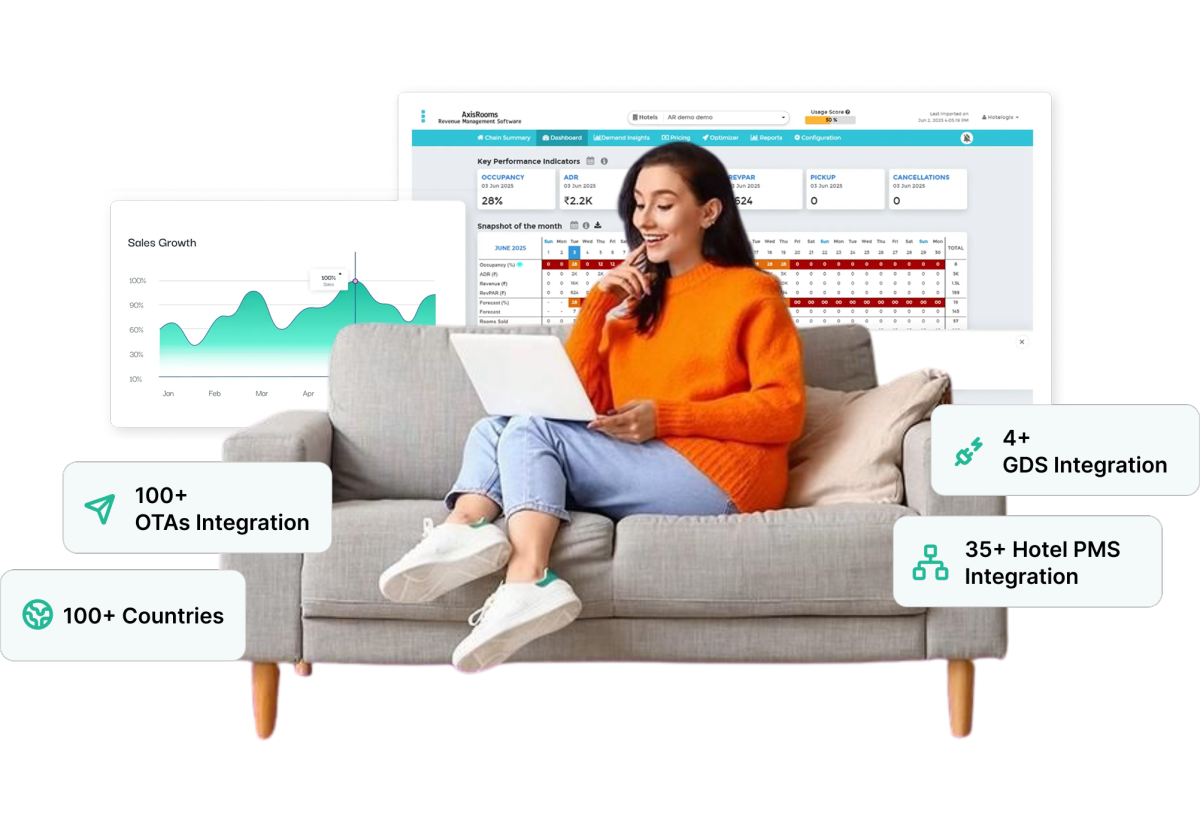
AxisRooms is a hotel distribution and revenue management platform that helps hotels improve visibility, streamline channel management, and optimize revenue through real-time connectivity and automation.

  • OTA Integrations: Connect with leading 100+ online travel agencies to increase visibility and reach the right guests for your hotel category.
  • PMS Integrations: Keep reservations, inventory, and operational data synchronized through effortless PMS connectivity.
  • Payment Gateway Integrations: Simplify online payments and create a smoother booking experience for guests.
  • Channel Manager: Update rates and inventory across multiple channels in real time while reducing the risk of overbookings.
  • Revenue Management Services: Make more informed pricing decisions using demand trends, booking patterns, and market insights.
  • Web Booking Engine: Encourage more direct bookings through a fast, user-friendly booking experience on your hotel website.

Whether you operate a boutique hotel, resort, heritage property, business hotel, or homestay, AxisRooms helps bring distribution, pricing, and booking channels together to support stronger occupancy, higher revenue, and better control over your hotel’s growth.

Conclusion

Every hotel has a unique identity, whether it’s a luxury resort, boutique property, heritage hotel, business hotel, or homestay. Understanding where your property fits in the market helps you make smarter decisions around pricing, guest acquisition, operations, and long-term growth.

But identifying your position is only part of the equation. Success also depends on how effectively you reach guests, manage inventory, and respond to changing demand across channels.

With AxisRooms, hotels can simplify distribution, strengthen online visibility, and make more informed revenue decisions from a single connected platform.

Ready to unlock your hotel’s full revenue potential? Book a free demo today and discover how AxisRooms can help you grow bookings, improve efficiency, and stay competitive in a rapidly evolving hospitality landscape.

Maximize Hotel Revenue with Axisrooms

Book a free Demo
Support Agent

FAQs

Hotels are categorized based on factors such as service level, location, target guests, amenities, ownership model, and operational focus. A property may fit into multiple hotel categories at the same time.

Profitability depends on location and demand, but resorts, luxury hotels, and well-positioned boutique hotels often achieve higher margins through premium pricing and ancillary revenue streams.

Yes. Heritage hotels operate from historically significant buildings such as palaces, forts, havelis, or colonial properties while preserving their architectural and cultural character.

Distribution strategy depends on the target guest segment, location, and booking behavior. Solutions like AxisRooms help hotels manage OTA connectivity, direct bookings, and channel performance from a single platform.

Boutique hotels, lifestyle hotels, extended-stay properties, wellness resorts, and experiential stays are among the fastest-growing segments as travelers increasingly seek personalized experiences.

Yes. A property can be classified in multiple ways at the same time. For example, a hotel can be a luxury resort, a beachfront hotel, and a boutique property simultaneously.

Most hotels require a PMS, booking engine, and hotel channel manager. Platforms such as Hotelogix and AxisRooms help hotels streamline operations, distribution, and revenue management as they scale.

Vedanshi Sharma

Vedanshi

Vedanshi Sharma is a hospitality content specialist at Axisrooms, where she creates educational and insight-driven content for modern hoteliers. Her work explores hotel technology, operational efficiency, revenue growth, and the future of guest experience in an increasingly digital hospitality landscape. With 2+ years of experience across hospitality SaaS, startups, and freelance content projects, she specializes in turning complex industry topics into clear, practical, and engaging content.

Explore Topic

Subscribe

Join the newsletter to get the latest updates.

Table of Contents

    Request a Demo

    AR Ebook

    AxisRooms
    AxisRooms App AxisRooms App

    Sign up for Our Newsletter

    Be the first to hear about our announcements, get important news, amazing offers & inside scoops

      AxisRooms pci AxisRooms ssl

      Company

      • About Us
      • Investors
      • Careers
      • News/Media
      • Support
      • Reviews
      • Contact Us
      • Privacy Policy
      • Terms and Conditions
      • Articles

      Products

      • Channel Manager
      • RM as Service
      • Web Booking Engine
      • Hotel Revenue Management System

      Why Axisrooms?

      • Staah Alternative
      • Aiosell Alternative
      • Siteminder Alternative
      • Rategain Alternative
      • DJUBO Alternative

      Axisrooms

      A complete suite of products for the hospitality industry

      Address

      • E-66, E Block, Sector 6, Noida, Uttar Pradesh 201301

      Sales

      • +91-9880330001
      • sales@axisrooms.com

      Support

      • +91-7026568280
      • support@axisrooms.com

      For support escalations

      • Arun
      • +91-9972181199
      • arun@axisrooms.com

      Contact Support

      • +91 8067488900
      • +91 8067417900
      • support@axisrooms.com
      Claim your 15-day free trial or request a demo
      Dynamic Pricing Popup

      By submitting this form, you accept our Privacy Policy