

Hotel room types are no longer just operational labels used by front desk teams. Today, room classification directly influences OTA visibility, pricing strategy, guest expectations, and hotel revenue performance.
Guests compare hotels across OTAs where room names, occupancy details, bed configurations, and amenities directly impact booking decisions. For example, a business hotel in Bengaluru may prioritize executive king and twin rooms for corporate travelers, while a Goa resort may focus more on villas and family suites.
In this guide, we’ll explain the different types of hotel rooms, how hotels classify them, and why room categorization matters for pricing, distribution, and revenue growth in 2026.
Why Hotel Room Type Classifications Matter Today
Hotel room classifications help hotels organize inventory more strategically across OTAs, booking engines, and direct channels while reducing booking confusion for guests.
For example, a “Deluxe Room” with better views or additional space can often command a significantly higher ADR than a standard room within the same property.
Hotels also rely on structured room categories to improve:
- OTA visibility: Accurate room mapping improves search filtering across booking platforms.
- Dynamic pricing: Different room categories allow hotels to price inventory more strategically.
- Guest segmentation: Families, business travelers, couples, and long-stay guests often search for different room configurations.
- Upselling opportunities: Premium room categories create natural upgrade paths during booking.
Hotels with clearly defined room categories also tend to create more consistent booking experiences because guests know what to expect before arrival.
What Are the Types of Rooms in a Hotel?
Hotels offer a variety of room types to cater to different guest preferences, travel purposes, and budgets. From compact single rooms for solo travellers to luxurious presidential suites for VIP guests, each room category is designed with specific features and amenities.
Understanding the different types of hotel rooms helps travellers choose the right accommodation while enabling hoteliers to price, market, and manage their inventory more effectively.
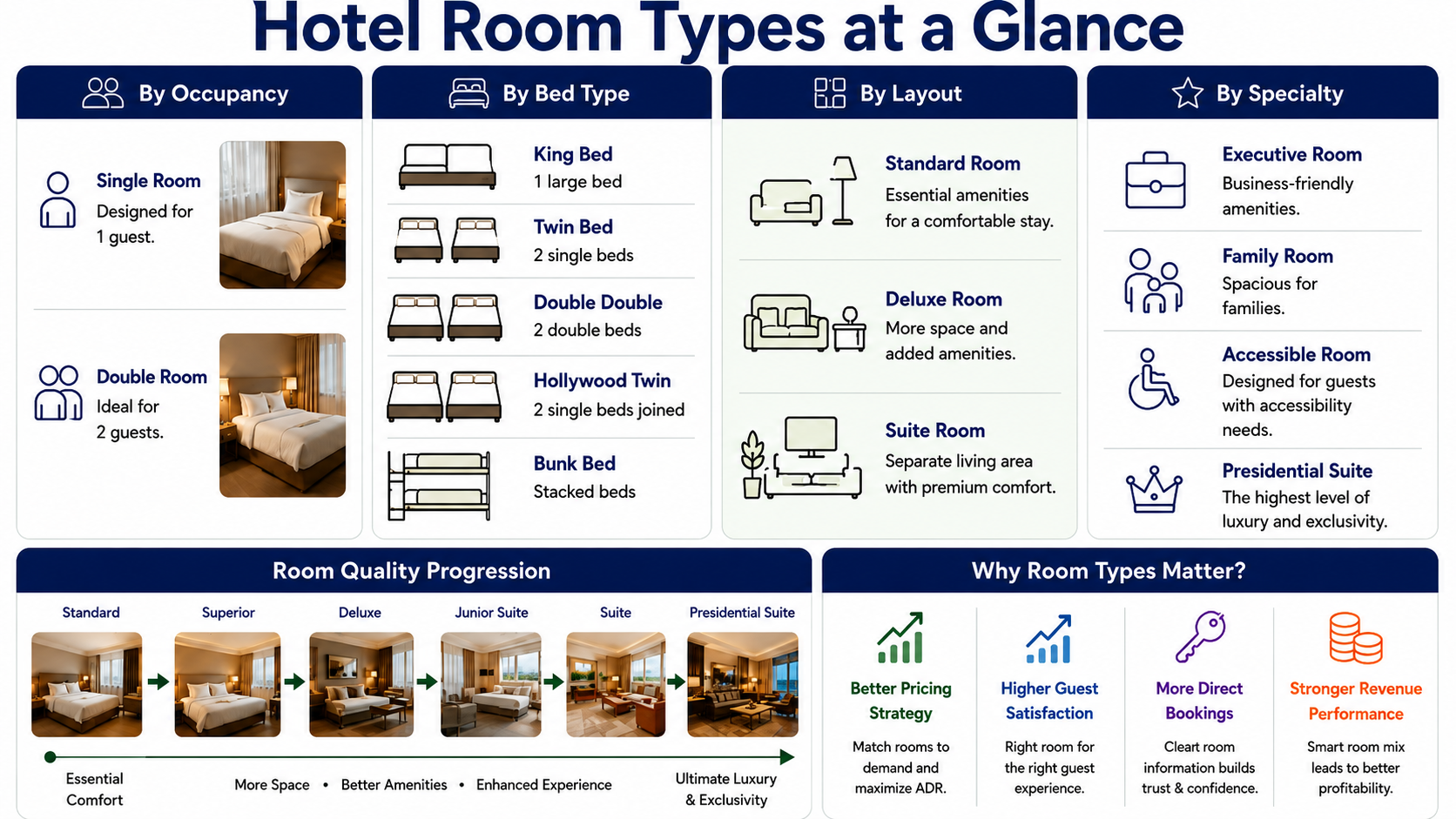
Figure: Hotel room types can be classified by occupancy, bed configuration, layout, quality, and specialty categories. Understanding these classifications helps travelers choose the right accommodation while enabling hotels to organize inventory and pricing more effectively.
Let’s explore each room type in detail.
Single Room
A Single Room is designed to accommodate one guest and is one of the most common room types in business hotels, budget hotels, and airport properties. Despite its compact size, it includes all the essential amenities needed for a comfortable stay, making it a practical and affordable choice for solo travellers.
Key features:
- Accommodates one guest
- One single bed
- Private bathroom
- Work desk, wardrobe, TV, and Wi-Fi
- Compact and functional layout
Ideal for: Solo travellers, business travellers, students, and guests on short overnight stays.
Double Room
A Double Room is designed for two guests and typically features one double, queen, or king-sized bed. It is one of the most popular hotel room types, offering a comfortable balance of space, convenience, and affordability for both leisure and business travellers.
Key features:
- Accommodates two guests
- One double, queen, or king-sized bed
- Private bathroom
- Standard in-room amenities
- Comfortable layout for couples or shared occupancy
Ideal for: Couples, business travellers, and leisure guests.
Twin Room
A Twin Room accommodates two guests but features two separate single beds instead of one large bed. It provides flexibility for guests travelling together while allowing each person to have their own sleeping space.
Key features:
- Two separate single beds
- Accommodates two guests
- Private bathroom
- Standard hotel amenities
- Comfortable shared layout
Ideal for: Friends, colleagues, corporate travellers, and tour groups.
Triple Room
A Triple Room is designed to comfortably accommodate three guests. Depending on the hotel, it may include three single beds or a combination of one double bed and one single bed. These rooms offer additional space without requiring guests to book multiple rooms.
Key features:
- Sleeps up to three guests
- Multiple bed configurations
- Spacious layout
- Private bathroom
- Standard hotel amenities
Ideal for: Small families, friends travelling together, and group travellers.
Quad Room
A Quad Room can accommodate up to four guests and is commonly found in family hotels, resorts, and budget accommodations. It provides ample sleeping space while helping families or groups stay together in one room.
Key features:
- Accommodates up to four guests
- Two double beds or four single beds
- Spacious layout
- Private bathroom
- Family-friendly amenities
Ideal for: Families, student groups, and budget-conscious travellers.
Queen Room
A Queen Room features one queen-sized bed and offers more sleeping space than a standard double room. It strikes a balance between comfort and affordability, making it one of the most widely available room categories in modern hotels.
Key features:
- One queen-sized bed
- Suitable for one or two guests
- Comfortable sleeping area
- Standard hotel amenities
- Private bathroom
Ideal for: Couples, solo travellers seeking extra space, and business travellers.
King Room
A King Room includes one king-sized bed, providing greater comfort and sleeping space than most standard room categories. Many hotels position king rooms as premium options due to their spacious layout and upgraded furnishings.
Key features:
- One king-sized bed
- Spacious room layout
- Premium furnishings
- Private bathroom
- Standard or upgraded amenities
Ideal for: Couples, honeymooners, and guests looking for added comfort.
Hollywood Twin Room
A Hollywood Twin Room features two single beds placed side by side, creating the appearance and comfort of one larger bed. The beds can often be separated when required, giving hotels greater flexibility to accommodate different guest preferences.
Key features:
- Two single beds joined together
- Convertible sleeping arrangement
- Comfortable shared layout
- Standard hotel amenities
Ideal for: Couples, friends, and hotels requiring flexible bed configurations.
Double-Double Room
A Double-Double Room includes two double beds and can comfortably accommodate up to four guests. It is especially popular in resorts and city hotels that cater to families and small travel groups.
Key features:
- Two double beds
- Accommodates up to four guests
- Spacious room layout
- Private bathroom
- Standard hotel amenities
Ideal for: Families, groups of friends, and business teams sharing accommodation.
Standard Room
A Standard Room is the hotel’s entry-level accommodation category and provides all the basic amenities required for a comfortable stay. While the exact size and features vary by property, it typically offers the best value for guests looking for a functional and affordable room.
Key features:
- Basic room category
- Essential amenities
- Comfortable furnishings
- Private bathroom
- Cost-effective accommodation
Ideal for: Budget-conscious travellers, business travellers, and short leisure stays.
Superior Room
A Superior Room offers more space or upgraded amenities than a standard room. Hotels often enhance these rooms with better interiors, improved views, or additional in-room facilities to provide a more comfortable guest experience.
Key features:
- Larger than a standard room
- Upgraded furnishings
- Better views or location
- Enhanced amenities
- Modern interior design
Ideal for: Couples, leisure travellers, and guests seeking extra comfort.
Deluxe Room
A Deluxe Room is a premium room category that offers more space, stylish interiors, and enhanced amenities compared to standard and superior rooms. Many hotels also include scenic views, upgraded bathrooms, or complimentary services to create a more luxurious experience.
Key features:
- Spacious room layout
- Premium furnishings
- Enhanced amenities
- Better views in many hotels
- Comfortable seating area
Ideal for: Couples, vacationers, and guests celebrating special occasions.
Executive Room
An Executive Room is designed primarily for business travellers and combines comfort with productivity. In addition to upgraded furnishings, these rooms often provide work-friendly amenities and, in some hotels, access to executive lounges or exclusive guest services.
Key features:
- Spacious work desk
- High-speed Wi-Fi
- Premium amenities
- Business-friendly layout
- Comfortable seating area
Ideal for: Corporate travellers, executives, and professionals on extended business trips.
Junior Suite
A Junior Suite is the most compact suite category, offering an open-plan layout that combines the sleeping and sitting areas into one spacious room. It serves as an entry point to luxury accommodation, providing more space and premium amenities than deluxe rooms without the cost of a full suite.
Key features:
- Open-plan sleeping and sitting area
- Larger than a deluxe room
- Premium furnishings
- Enhanced amenities
- Comfortable lounge space
Ideal for: Couples, long-stay guests, and travellers looking for a touch of luxury.
Suite
A Suite offers a significant upgrade from standard guest rooms by providing separate living and sleeping areas. Designed for greater comfort, privacy, and flexibility, suites are a popular choice for extended stays, families, and guests seeking a premium hotel experience.
Key features:
- Separate bedroom and living room
- Spacious layout
- Premium furnishings
- Luxury amenities
- Dining or workspace in many hotels
Ideal for: Families, business executives, VIP guests, and extended stays.
Presidential Suite
A Presidential Suite represents the pinnacle of luxury in most hotels. Featuring expansive living spaces, multiple rooms, premium furnishings, and exclusive services, it is designed to deliver an exceptional experience for VIP guests and special occasions.
Key features:
- Multiple bedrooms and living areas
- Luxury interiors
- Premium amenities
- Panoramic views (property dependent)
- Exclusive guest services
Ideal for: VIP guests, celebrities, dignitaries, and luxury travellers.
Common Suite Variations: Depending on the property, hotels may also offer Executive Suites, One-Bedroom Suites, Penthouse Suites, Duplex Suites, or Honeymoon Suites. While the names and layouts vary between hotels, these suite categories generally provide additional space, enhanced privacy, premium amenities, or specialized experiences for different guest preferences.
Studio Room
A Studio Room combines the sleeping, living, and sometimes kitchenette areas into one open-plan space. This layout makes it especially suitable for guests planning longer stays or those who prefer apartment-style accommodation.
Key features:
- Open-plan layout
- Sleeping and living space combined
- Kitchenette in many properties
- Comfortable seating area
- Functional design
Ideal for: Long-stay guests, digital nomads, business travellers, and couples.
Family Room
A Family Room is designed to comfortably accommodate families travelling together. These rooms are generally larger than standard rooms and often include additional beds, sofa beds, or interconnected sleeping areas.
Key features:
- Larger floor area
- Multiple sleeping arrangements
- Family-friendly amenities
- Extra storage space
- Private bathroom
Ideal for: Families with children and multi-generational travellers.
Connecting Room
A Connecting Room consists of two separate guest rooms linked by an internal connecting door. Guests can move between both rooms without entering the hallway, offering added convenience while maintaining privacy when needed.
Key features:
- Two adjoining rooms
- Internal connecting door
- Separate bathrooms
- Flexible room access
- Added privacy
Ideal for: Families, large groups, and guests travelling with children.
Accessible Room
An Accessible Room is specially designed to accommodate guests with disabilities or reduced mobility. These rooms follow accessibility guidelines and include features that improve comfort, safety, and ease of movement.
Key features:
- Wider doorways
- Roll-in shower or accessible bathroom
- Grab bars and safety features
- Wheelchair-friendly layout
- Lower fixtures and controls
Ideal for: Guests with disabilities, senior travellers, and anyone requiring accessible accommodation.
Villa or Bungalow
A Villa or Bungalow is a standalone accommodation unit that offers greater privacy, larger living spaces, and premium amenities. These room types are commonly found in resorts, beach properties, and luxury destinations where guests seek a more exclusive stay experience.
Key features:
- Independent accommodation
- Spacious indoor and outdoor areas
- Private entrance
- Luxury amenities
- Greater privacy
Ideal for: Families, honeymooners, luxury travellers, and guests planning extended resort stays.
What Factors Define Hotel Room Types?
Hotel room types aren’t classified by size alone. Hotels use several factors to categorize rooms, helping guests choose the right accommodation while enabling hoteliers to price rooms, manage inventory, and market them more effectively.
Here are the key factors that define hotel room types.

1- Occupancy Capacity
One of the primary ways hotels classify rooms is by the number of guests they can comfortably accommodate. Occupancy-based room types help hotels maximize space while giving guests accommodation that matches their travel needs.
For example, a Single Room is designed for one guest, a Double Room accommodates two guests, while Triple and Quad Rooms cater to families and small groups. Occupancy also influences room pricing, housekeeping schedules, and inventory planning.
2- Bed Configuration
The type and number of beds in a room are another important factor in room classification. While two rooms may accommodate the same number of guests, their bed configurations can make them suitable for different traveller preferences.
For instance, a Twin Room features two separate single beds, making it ideal for friends or colleagues, whereas a King Room offers one king-sized bed for couples seeking extra comfort. Similarly, Hollywood Twin Rooms provide flexible sleeping arrangements by combining two single beds into one larger bed.
3- Room Size and Layout
The overall size and layout of a room significantly impact both guest experience and pricing. Larger rooms often provide dedicated living, dining, or work areas, making them more suitable for longer stays or premium travellers.
For example, a Studio Room combines sleeping and living spaces in an open-plan layout, while a Suite includes separate living and sleeping areas for added privacy. Luxury properties may also offer Villas or Bungalows, which provide standalone accommodation with spacious indoor and outdoor living areas.
4- Amenities and In-Room Features
Hotels often differentiate room categories based on the amenities and services included with the stay. Enhanced features create a more comfortable guest experience and justify premium pricing.
For example, a Superior Room may include upgraded furnishings and better views than a standard room, while a Deluxe Room could offer premium toiletries, a larger bathroom, or a private balcony. High-end suites may also include executive lounge access, kitchenettes, Jacuzzis, or personalized concierge services.
5- Comfort and Luxury Level
Hotels commonly classify rooms according to their level of comfort and luxury. These categories make it easier for guests to understand the overall experience they can expect while allowing hotels to position rooms at different price points.
For example, Standard Rooms focus on essential comfort, Superior and Deluxe Rooms provide upgraded features and more space, while Executive Rooms, Junior Suites, and Presidential Suites cater to guests seeking premium amenities and exclusive services.
6- Accessibility and Guest Requirements
Many hotels also create specialized room categories to accommodate different guest needs and improve accessibility. These rooms are designed to provide greater comfort, convenience, and inclusivity without compromising the overall guest experience.
For example, Accessible Rooms include wider doorways, roll-in showers, grab bars, and wheelchair-friendly layouts, while Connecting Rooms allow families or larger groups to stay close together while still enjoying separate sleeping spaces.
7- Distribution and Room Classification Codes
Beyond what guests see, hotels also classify room types using standardized room codes within their Property Management System (PMS), Channel Manager, and Global Distribution Systems (GDS). These codes help ensure room categories remain consistent across the hotel’s website, OTAs, and travel agent booking platforms.
For example, a Deluxe King Room should appear with the same name, amenities, and occupancy details whether a guest books through the hotel’s website, Booking.com, Expedia, or a travel agency.
Consistent room classification improves the booking experience, reduces guest confusion, and helps hotels manage inventory more accurately across all distribution channels.
Types of Hotel Rooms by Occupancy
Hotels classify rooms by occupancy to indicate the maximum number of guests a room can comfortably accommodate. This helps travelers choose the right room while enabling hotels to manage inventory, pricing, and guest expectations more effectively.
- Single Room: Designed for one guest, single rooms are commonly chosen by solo travellers and business professionals looking for a practical and affordable stay.
- Double Room: Accommodates two guests and is one of the most common room categories for couples and leisure travellers.
- Twin Room: Also designed for two guests but furnished with two separate single beds, making it suitable for friends, colleagues, or siblings travelling together.
- Triple Room: Configured to comfortably accommodate three guests using a combination of double, single, or sofa beds.
- Quad Room: Designed for up to four guests, quad rooms are a practical choice for families and small groups travelling together.
- Double-double Room: Features two double beds and typically accommodates up to four guests, making it ideal for families or friends who prefer separate sleeping spaces.
Double Room vs Twin Room
A double room usually contains one double, queen, or king-size bed for two guests, while a twin room includes two separate single beds. Hotels often use twin rooms for business travelers and group bookings where guests prefer separate sleeping arrangements.
Types of Hotel Rooms by Bed Type
Bed configuration is one of the most common ways hotels classify room types. Whether guests prefer a king-size bed, separate twin beds, or space-saving bunk beds, the bed arrangement helps hotels cater to different traveller preferences while maximizing room functionality.
- King Room: Features a king-size bed, providing extra sleeping space and comfort for couples or guests who prefer a larger bed.
- Queen Room: Includes one queen-size bed, offering a balance between comfort and space efficiency for solo travellers and couples.
- Twin Room: Equipped with two separate single beds, making it a practical choice for friends, colleagues, or siblings sharing a room.
- Hollywood Twin Room: Consists of two single beds placed together to form one larger bed, giving hotels the flexibility to accommodate both couples and twin occupancy.
- Bunk Bed Room: Features two or more beds stacked vertically to maximize floor space, making it a practical option for serving multiple guests within a compact room.
Types of Hotel Rooms by Layout and Quality
Beyond occupancy and bed configuration, hotels also classify rooms based on their layout and overall quality. These categories help hotels create clear upgrade paths, differentiate pricing, and cater to guests with varying comfort and budget preferences.
- Standard Room: Entry-level accommodation offering essential amenities and a comfortable stay at the most accessible price point.
- Superior Room: Provides additional space, upgraded interiors, or better views compared to a standard room, creating a natural mid-tier option.
- Deluxe Room: Offers enhanced comfort through premium furnishings, larger layouts, or extra amenities, making it a popular upgrade choice.
- Studio Room: Combines the sleeping and living areas into one open-plan layout, making it particularly suitable for extended stays.
- Junior Suite: Bridges the gap between a deluxe room and a full suite by offering a larger open-plan living space without separate rooms.
- Suite: Includes separate living and sleeping areas, providing greater privacy and a more premium guest experience.
- Presidential Suite: Represents the highest level of luxury in many hotels, featuring expansive layouts, exclusive amenities, and personalized services.
Quick Comparison: Standard vs Superior vs Deluxe
| Room Type | Typical Difference |
| Standard Room | Offers essential amenities and a functional layout, making it the most affordable room category. |
| Superior Room | Provides slightly more space, upgraded interiors, or better views than a standard room. |
| Deluxe Room | Features premium furnishings, enhanced amenities, and a more spacious or scenic layout for a higher-end guest experience. |
While the exact features vary by hotel, these three categories generally represent the progression from entry-level accommodation to premium comfort.
Specialty Hotel Room Types
In addition to standard room categories, hotels often create specialty room types to serve specific guest segments and differentiate their offerings. These rooms help hotels cater to a wider range of travelers while creating more personalized stays.
- Accessible Rooms: Designed with wider doorways, step-free access, grab bars, and other accessibility features to provide a comfortable stay for guests with mobility or other accessibility needs.
- Connecting Rooms: Two separate guest rooms linked by an internal door, allowing families and groups to stay together while still enjoying the privacy of individual rooms.
- Family Room: Designed specifically for families, these rooms offer extra space, flexible bedding configurations, or child-friendly amenities to accommodate parents travelling with children comfortably.
- Executive Rooms: Created for business travellers, these rooms typically include dedicated workspaces, premium amenities, and, in some hotels, access to executive lounges.
- Pet-Friendly Rooms: Specially prepared for guests travelling with pets, often featuring pet amenities, easy-to-clean flooring, and hotel policies that accommodate companion animals.
- Cabana Rooms: Located next to or with direct access to the pool area, cabana rooms are popular in resorts where guests value convenience and outdoor relaxation.
- Villas & Bungalows: Independent accommodation units offering larger living spaces, greater privacy, and premium amenities, making them popular for luxury vacations and extended stays.
- Wellness Rooms: Designed to promote relaxation through features such as improved sleep environments, fitness equipment, aromatherapy, or wellness-focused amenities.

Manage All Your OTAs from One Place
Request a DemoHow to Choose the Right Room Types for Your Hotel
Choosing the right room mix depends heavily on property type, target audience, and market demand.
Business hotels in cities like Bengaluru, Mumbai, and Gurgaon often prioritize king rooms, twin rooms, and executive categories because of strong corporate travel demand. Leisure resorts, on the other hand, may focus more on villas, family rooms, and premium suites.
Hotels should evaluate:
- Property size: Room mix flexibility often depends on available inventory and operational scale.
- Target audience: Business, leisure, family, or group travelers.
- Business vs leisure mix: Corporate-focused hotels and leisure resorts usually require very different room configurations.
- OTA demand trends: Most searched room categories across booking channels.
- Upselling opportunities: Premium room categories that improve ADR.
- Operational efficiency: Simplified housekeeping and inventory management.
A well-balanced room mix helps hotels improve occupancy while maximizing pricing flexibility across seasons.
Best Practices for Naming Hotel Room Types Across OTAs, PMS & Channel Managers
Hotel room naming directly impacts OTA visibility, inventory accuracy, and guest booking confidence across channels.
Hotels should focus on:
- OTA naming consistency: Maintain the same room names and descriptions across Booking.com, Expedia, Agoda, and direct channels.
- PMS mapping: Ensure room categories remain aligned between the PMS, booking engine, and OTA platforms.
- Inventory synchronization: Avoid overbookings and pricing mismatches caused by inconsistent room mapping.
- Guest expectation management: Clear room descriptions reduce confusion around occupancy, bed type, amenities, and room size.
- SEO visibility through naming: Descriptive room names like “Deluxe King Room with Balcony” improve OTA search visibility and booking relevance.
For example, listing the same room as “Deluxe King Room” on Booking.com, “Premium Double Room” on Expedia, and “Executive Deluxe” on the hotel website can create unnecessary guest confusion.
This is also where connected distribution systems like AxisRooms Channel Manager help hotels maintain consistent room distribution across OTAs, PMS platforms, and booking engines while reducing operational mismatches.
How Different Room Types Impact ADR & RevPAR
Hotels don’t create multiple room categories just to offer guests more choices. Each room type plays a strategic role in revenue management by creating clear upgrade paths, supporting dynamic pricing, and increasing the average revenue earned from every booking.
Every additional room category gives hotels another opportunity to differentiate pricing without increasing inventory.
| Room Type | Typical ADR Premium vs Standard | Revenue Opportunity |
| Superior Room | +10–15% | Encourages guests to upgrade for slightly better amenities or views. |
| Deluxe Room | +15–25% | Creates a strong mid-tier pricing option with higher perceived value. |
| Suite | +50–100% | Drives upselling and attracts premium leisure and business travellers. |
| Presidential Suite | +200%+ | Generates high-value bookings while strengthening the hotel’s luxury positioning. |
Premium room categories improve more than just ADR; they also strengthen RevPAR by encouraging guests to upgrade, increasing revenue from the same inventory, and creating clearer pricing differentiation across room tiers.
However, room categories alone don’t maximize revenue. Hotels also need the right pricing strategy to ensure every room type is sold at its optimal value across different booking channels.
Room Types in Indian Hotels
Hotel room categories in India often vary depending on the property’s location, target audience, and business model. While business hotels prioritize efficiency and corporate-friendly accommodations, leisure properties focus on spacious layouts and experience-driven stays.
Understanding these differences helps hotels design room inventories that align with guest expectations and revenue goals.
- Business Hotels: Primarily offer Standard, Executive, King, and Twin Rooms to cater to corporate travellers who value functionality, comfort, and convenient workspaces during short business trips.
- Budget Hotels: Focus on Standard, Single, and Double Rooms with essential amenities, allowing them to maximize occupancy while keeping room rates affordable for value-conscious travellers.
- Boutique Hotels: Differentiate themselves through uniquely designed rooms, themed suites, and personalized guest experiences rather than large inventories. Many boutique properties offer premium rooms that reflect local culture, heritage, or contemporary design.
- Resorts: Commonly feature Villas, Bungalows, Family Rooms, Cabana Rooms, and Suites that provide larger living spaces, privacy, and recreational amenities suited for leisure travellers.
- Heritage Hotels: Often combine traditional architecture with luxury accommodations, offering themed suites, royal chambers, and premium rooms that showcase the property’s cultural and historical character.
- MICE Hotels: Prioritize flexible room inventory, including Twin Rooms, Double Rooms, Executive Rooms, and Connecting Rooms, to efficiently accommodate corporate groups, conferences, and event attendees.
As travel preferences continue to evolve, Indian hotels are also seeing increased demand for family-friendly accommodations, flexible bedding options, wellness-focused rooms, and premium suites that offer personalized guest experiences.
The Future of Hotel Room Types: Attribute-Based Selling (ABS)
The future of hotel room classification is shifting from fixed room categories toward Attribute-Based Selling (ABS), where guests select the specific features they value instead of choosing only a predefined room type.
Travelers increasingly expect more personalized stay experiences based on features such as:
- Floor preference: High-floor, low-floor, or corner-room options.
- Balcony access: Rooms with private outdoor space.
- Views: Sea-view, city-view, garden-view, or pool-view rooms.
- Bed configuration: Flexible king, twin, or family bedding options.
- Wellness features: Sleep-focused amenities, air purification, circadian lighting, or wellness-focused interiors.
- Hybrid workspaces: Rooms designed for remote work and extended stays.
Hotels are also seeing rising demand for wellness rooms and sleep tourism experiences. In fact, the global sleep tourism market was valued at USD 74.54 billion in 2024 and is projected to reach USD 148.98 billion by 2030.
Hotels offering greater personalization and flexibility are likely to gain a stronger competitive advantage across modern booking platforms.
Why AxisRooms Is the Best for Managing Room Types
Managing room types across OTAs, booking engines, PMS platforms, and direct channels can quickly become difficult when inventory grows.
AxisRooms helps hotels simplify room distribution, inventory management, and pricing visibility through one connected platform designed for modern hotel operations.
| AxisRooms Features | How It Helps Hotels Manage Room Types |
| Channel Manager | Syncs room availability and rates across OTAs in real time |
| OTA Integrations | Maintains consistent room mapping across booking platforms |
| PMS Integrations | Keeps room inventory aligned with hotel operations |
| Web Booking Engine | Displays room categories consistently for direct bookings |
| Revenue Management Service | Helps hotels price premium room categories dynamically |
| Payment Gateways | Supports smoother and faster direct booking transactions |
As hotels introduce more specialized room categories and personalized booking experiences, connected inventory management becomes increasingly important for maintaining pricing consistency and operational efficiency.
Conclusion
Hotel room structures are becoming increasingly strategic as hotels balance personalization, pricing flexibility, OTA distribution, and evolving guest expectations across channels.
As traveler preferences continue shifting toward customized stay experiences, hotels need room inventory systems that support clearer positioning, smoother distribution, and more efficient revenue management.
If your hotel wants to simplify room distribution, pricing visibility, and OTA inventory management, exploring an integrated solution like AxisRooms Channel Manager can help improve operational efficiency and revenue performance.
Book a free demo today to see how connected hotel distribution management works in real time.