
For many hotels, attracting a steady flow of guests requires more than relying on online travel agencies (OTAs) or direct bookings alone. Tour operators remain an important distribution partner, helping hotels connect with international travelers, group tours, corporate guests, and leisure markets that may otherwise be difficult to reach. The right partnerships can increase occupancy, strengthen revenue during low-demand periods, and expand a hotel’s market reach.
However, not all tour operators work the same way. Understanding their role, the different types of tour operators, and how they compare with travel agents, destination management companies (DMCs), and OTAs is essential for creating an effective distribution strategy.
In this guide, we’ll explain how tour operators work, why they matter for hotels, and how to build successful partnerships that drive long-term business.
What Is a Tour Operator?
A tour operator is a travel business that designs, packages, and sells complete travel experiences by combining accommodation, transportation, sightseeing, meals, activities, and other travel services into a single itinerary. In simple terms, the tour operator’s meaning refers to a company that plans and organizes trips rather than selling individual travel services.
For hotels, tour operators are an important distribution partner because they bring individual travelers, groups, and international visitors through pre-arranged travel packages. Instead of marketing directly to every traveler, hotels can work with tour operators to reach new markets, increase occupancy, and secure bookings throughout the year.
Types of Tour Operators: Inbound, Outbound & Domestic
Tour operators can be classified into three main types based on the markets they serve. Each type caters to a different traveler segment, making it important for hotels to choose partners that align with their target guests and distribution goals.
Inbound Tour Operators
An inbound tour operator brings international travelers into a destination by creating travel packages that typically include accommodation, transportation, sightseeing, and local experiences. These operators work with overseas travel agencies and international partners to promote destinations to foreign visitors.
For example, a UK travel company may partner with an inbound tour operator in India to sell Rajasthan heritage tours that include hotel stays in Jaipur, Jodhpur, and Udaipur. For hotels, inbound tour operators open the door to international guests, group bookings, and overseas markets that may be difficult to reach through direct marketing alone.
Outbound Tour Operators
An outbound tour operator organizes international travel for residents of its own country. These operators create overseas holiday packages by partnering with airlines, hotels, and local suppliers in destinations around the world.
For example, an Indian outbound tour operator may sell vacation packages to Thailand, Dubai, or Europe. While outbound operators have limited relevance for hotels within the same country, they can become important partners for hotels looking to attract travelers from overseas markets.
Domestic Tour Operators
A domestic tour operator designs and sells travel packages within the same country, catering to local leisure travelers, families, corporate groups, pilgrims, and weekend holidaymakers.
For example, a domestic tour operator may offer Kerala backwater holidays or Golden Triangle tours covering Delhi, Agra, and Jaipur. These partnerships are especially valuable for generating bookings during weekends, festivals, destination weddings, and school holidays while expanding a hotel’s reach across regional markets.
Comparison of Tour Operator Types
| Type | Who They Serve | Example | Why It Matters to Hotels |
| Inbound Tour Operator | International travelers visiting a country | A UK agency selling Rajasthan heritage tours | Brings overseas guests, group bookings, and longer stays |
| Outbound Tour Operator | Residents traveling abroad | An Indian company offering European holiday packages | Useful for hotels targeting international source markets |
| Domestic Tour Operator | Residents traveling within the same country | A Kerala holiday or a Golden Triangle tour package | Drives domestic leisure, weekend, festival, and group bookings |
What Is Inbound Tourism and Why Does It Matter for Hotels?
Inbound tourism refers to international travelers visiting a country for leisure, business, medical treatment, or other purposes. For hotels, it represents an important source of demand, bringing guests from overseas markets who contribute to occupancy and local tourism.
For example, a traveler from Germany visiting India may spend two weeks exploring destinations such as Delhi, Agra, Jaipur, and Udaipur, staying at multiple hotels along the way. Many of these trips are arranged through inbound tour operators, who package accommodation, transportation, and sightseeing into a single itinerary.
Here’s why inbound tourism matters for hotels. Properties that attract international travelers often benefit from:
- Access to international source markets without extensive overseas marketing.
- Longer average stays, as international visitors typically explore multiple destinations.
- Higher-value bookings, including groups, tours, and curated travel packages.
- More balanced demand by attracting guests from markets with different travel seasons.
As international tourism grows, partnering with inbound tour operators can help hotels expand their reach, diversify demand, and strengthen their overall distribution strategy.
Tour Operator vs. Travel Agent vs. DMC vs. OTA: What’s the Difference?
These four entities represent different stages of the travel supply chain. While OTAs provide online booking platforms, travel agents sell travel services, tour operators create and sell complete travel packages, and DMCs deliver local destination services that bring those experiences to life.
Understanding how each one operates helps hotels choose the right partners for their distribution strategy.
| Feature | Travel Agent | Tour Operator | OTA | DMC |
| Primary Role | Advises travelers and books flights, hotels, tours, and other travel services. | Designs, bundles, and sells complete travel packages. | Provides an online marketplace where travelers can compare and book accommodation and travel services. | Coordinates local logistics, experiences, transportation, guides, and destination services. |
| Typical Customers | Individual travelers and corporate clients. | Travelers, groups, and travel agencies. | Individual travelers booking online. | Tour operators, travel agencies, event planners, and corporate groups. |
| How They Work with Hotels | Book rooms on behalf of individual guests. | Contracts room inventory and includes hotels in packaged itineraries. | List hotel inventory online and generate direct reservations. | Coordinates hotel stays as part of destination-specific travel programs and events. |
| Revenue Model | Earns commissions or service fees on bookings. | Earns through package markups, negotiated rates, or commissions. | Earns commissions from hotels or booking fees from suppliers. | Earns service fees or negotiated margins for destination management services. |
| Best For Hotels | Attracting individual leisure and business travelers. | Securing group bookings, package tours, and international demand. | Increasing online visibility and reaching self-booking travelers. | Managing destination events, incentive groups, luxury travel, and customized experiences. |
Rather than competing with one another, these businesses often work together within the travel ecosystem. Understanding their roles helps hotels build stronger partnerships and create a more balanced distribution strategy.
Benefits of Working with Tour Operators for Hotels
Tour operators do much more than bring guests to a hotel. They help hotels expand their market reach, improve occupancy, and create a more balanced distribution strategy. For many properties, especially those targeting leisure and international travelers, tour operator partnerships remain an important source of long-term business.
-
Increase Room-Night Volume
Tour operators often book multiple rooms for groups, tours, and packaged holidays, enabling hotels to generate more room nights than individual bookings alone.
-
Fill Low-Demand Periods
Collaborating with tour operators to promote seasonal packages can help sustain better occupancy during slower months.
-
Expand into International Markets
Inbound tour operators already have relationships with overseas travel agencies and buyers. These partnerships give hotels access to international travelers without requiring significant investment in overseas marketing.
-
Reduce Customer Acquisition Costs
Instead of acquiring every guest through advertising or direct marketing, hotels can leverage tour operator partnerships to generate bookings through established distribution networks.
-
Support More Predictable Demand
Many tour operators negotiate bookings well in advance, giving hotels better visibility into future occupancy and making it easier to forecast inventory and revenue.
Tour operators work best as part of a balanced distribution strategy, complementing OTAs, direct bookings, and corporate business to create a more resilient booking mix.
How to Partner with Tour Operators
Building successful partnerships with tour operators requires more than offering discounted room rates. Hotels need to demonstrate value, streamline booking processes, and maintain reliable long-term relationships that benefit both parties.
1. Identify Tour Operators That Match Your Hotel
Research tour operators that cater to your target audience and destination. For example, a luxury resort should focus on premium leisure operators, while a business hotel may benefit from corporate or MICE-focused tour operators.
2. Create a Compelling Partnership Proposal
Prepare a concise introduction highlighting your hotel’s unique selling points, room categories, amenities, guest reviews, and nearby attractions. Clearly outline your commission structure, contract terms, and the value your property brings to their travel packages.
3. Offer Competitive Commercial Terms
Provide fair pricing, transparent commission structures, and clear partnership expectations that create value for both your hotel and the tour operator. Detailed contract terms such as room allotments, release periods, and payment schedules should be agreed upon before the partnership begins.
4. Simplify the Booking Process
Integrate your PMS and Channel Manager with tour operator booking systems whenever possible. Real-time inventory updates, instant booking confirmations, and automated communication make it easier for operators to work with your hotel.
5. Build Long-Term Relationships
Maintain regular communication, share seasonal offers, host familiarization (FAM) trips, and collaborate on promotional campaigns. Strong relationships often lead to repeat business and higher booking volumes.
6. Monitor Performance and Continuously Improve
Track KPIs such as room nights, booking value, cancellation rates, and guest feedback to evaluate each partnership. Reviewing performance regularly helps strengthen successful relationships and refine your distribution strategy.
Successful partnerships are built through clear communication, connected technology, and continuous collaboration. By choosing the right tour operators and regularly evaluating performance, hotels can create long-term relationships that drive sustainable growth.
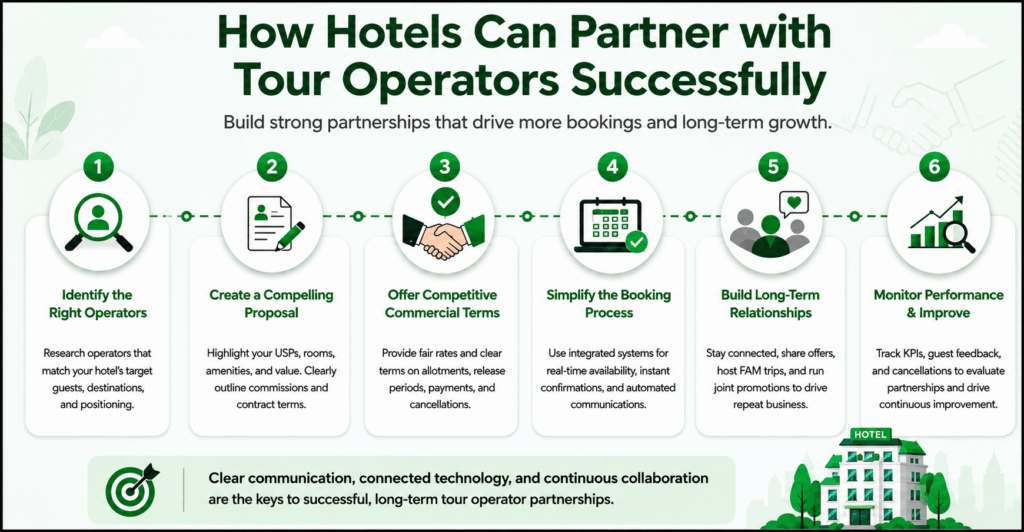
Figure: Six essential steps hotels can follow to build successful, long-term partnerships with tour operators.
Common Mistakes Hotels Make with Tour Operator Partnerships (and How to Avoid Them)
Even the strongest hotel-tour operator partnerships can face challenges if expectations, processes, and performance are not managed effectively. Avoiding these common mistakes enables hotels to strengthen partnerships, improve operational efficiency, and get more value from their tour operator network.
- Unclear Contract Terms: Ensure every agreement clearly defines commission structures, payment schedules, room allotments, cancellation policies, release periods, and contract renewal terms. Clear contracts reduce misunderstandings and protect both parties.
- Ignoring Release Periods: Without agreed release periods, unsold allotted rooms may remain blocked until the last minute, limiting opportunities to sell them through direct bookings or other channels. Review release periods regularly to keep inventory flexible.
- Overlooking GST & Documentation: Inaccurate invoices, missing GST records, or incomplete commission documentation can lead to accounting challenges and compliance issues. Maintaining organized financial records supports smoother operations and easier reconciliations.
- Not Measuring Partnership Performance: Regularly review metrics such as room nights generated, occupancy contribution, revenue, and cancellation rates. This helps identify high-performing tour operators and informs future partnership decisions.
- Managing Allotments Manually: Tracking room allotments through spreadsheets or emails increases the risk of inventory mismatches and overbookings. Connected hotel systems help keep allotments, availability, and bookings synchronized across distribution channels.
Getting these fundamentals right helps hotels build stronger tour operator partnerships, reduce operational challenges, and unlock greater long-term value.
Understanding Tour Operator Commission Models & Hotel Contracts
Once you’ve found the right tour operator, the next step is agreeing on commercial terms. Understanding common commission models and contract clauses helps hotels negotiate fair partnerships, avoid misunderstandings, and build long-term relationships.
| Term | What It Means | Why It Matters for Hotels |
| Commission Model | The hotel pays the tour operator a percentage of each confirmed booking. | A flexible, performance-based model where hotels only pay for bookings received. |
| Net-Rate Model | The hotel provides a wholesale room rate, and the tour operator adds its own markup before selling the package. | Gives operators pricing flexibility while allowing hotels to secure contracted business. |
| Room Allotment | A fixed number of rooms reserved exclusively for a tour operator during a specific period. | Helps generate predictable bookings but requires careful inventory management. |
| Release Period | The deadline by which unused allotted rooms must be returned to the hotel for resale. | Prevents unsold inventory and gives hotels time to sell rooms through other channels. |
| Cancellation Policy | Defines the terms for cancellations, refunds, no-shows, and booking modifications. | Protects revenue and reduces disputes between hotels and tour operators. |
| Contract Renewal | A periodic review of partnership agreements, pricing, and commercial terms. | Keeps contracts aligned with changing demand, market conditions, and business goals. |
The table above provides a quick overview of the most common tour operator contract terms. Here’s a closer look at what each one means and why it matters for hotels.
1. Commission Model
In a commission model, the hotel pays the tour operator a pre-agreed percentage for every confirmed booking. Since payment is made only when a reservation is generated, this is one of the most widely used and low-risk partnership models.
2. Net-Rate Model
Instead of paying commission, hotels offer tour operators a fixed wholesale or net rate. The operator then adds its own markup before selling the package to travelers. This model is commonly used for packaged holidays and group travel.
3. Room Allotment
Hotels may reserve a specific number of rooms exclusively for a tour operator during agreed travel periods. While this helps secure advance bookings, hotels should balance allotments carefully to avoid restricting inventory during periods of high demand.
4. Release Period
A release period specifies how many days before arrival unused allotted rooms must be returned to the hotel. This allows hotels to make those rooms available through direct bookings or other distribution channels instead of leaving inventory unsold.
5. Cancellation Policy
Every partnership should clearly define cancellation deadlines, refund conditions, no-show charges, and booking modification rules. Setting these expectations up front helps prevent disputes and protects both parties.
6. Contract Renewal
Tour operator agreements should be reviewed regularly to update room rates, commission structures, allotments, and promotional offers. Regular reviews ensure partnerships remain competitive and continue delivering value as market conditions evolve.
A well-structured contract creates transparency for both hotels and tour operators, laying the foundation for a successful and long-lasting partnership.

Manage All Your OTAs from One Place
Request a DemoWorking with Tour Operators in India: Key Business & Compliance Considerations
Working with tour operators in India involves more than negotiating room rates and signing contracts. Hotels should also understand the key business, tax, and operational considerations that support smooth partnerships and ensure regulatory compliance.
- Understand GST on Tour Operator Commissions: Hotels should clearly define whether commission is payable on confirmed bookings and ensure GST is applied according to the applicable tax regulations. Consulting a qualified tax professional can help ensure compliance with current GST requirements.
- Review Commercial Agreements Carefully: Every agreement should clearly specify commission structures, payment schedules, room allotments, cancellation policies, release periods, and contract renewal terms. Well-defined contracts reduce disputes and create stronger long-term partnerships.
- Partner with Recognized Industry Associations: Working with reputable tour operators, including members of organizations such as the Indian Association of Tour Operators (IATO), can provide greater confidence in service standards, business practices, and industry credibility.
- Maintain Accurate Accounting Records: Keep detailed records of bookings, invoices, commission payments, GST documentation, and reconciliations. Accurate financial records simplify audits, improve reporting, and support healthy business relationships.
Example
A heritage hotel in Jaipur partners with an inbound tour operator to sell Rajasthan tour packages. Before accepting bookings, both parties agree on commission terms, room allotments, payment schedules, cancellation policies, and invoicing procedures. Clear documentation and accurate accounting keep the partnership running efficiently while reducing administrative issues.
Hotels that combine strong commercial agreements with sound financial practices are better positioned to build reliable, long-term relationships with tour operators across India.
How to Automate Tour Operator Invoicing and Payments
Many of these operational challenges can be reduced by automating invoicing and payment workflows. Instead of relying on manual processes, hotels can use connected systems to improve accuracy, reduce administrative effort, and strengthen relationships with tour operators.
- Generate invoices automatically: Configure your hotel management system to create invoices as soon as a booking is confirmed, eliminating manual data entry and reducing billing errors.
- Accept secure online payments: Integrate with trusted payment gateways to enable tour operators to pay deposits or outstanding balances online through secure payment links.
- Automate payment reminders: Schedule reminders for upcoming or overdue payments to reduce follow-ups and encourage timely settlements without manual intervention.
- Track invoices and payment status in real time: Use a centralized dashboard to monitor outstanding invoices, completed payments, credit notes, and account balances for every tour operator.
- Simplify reconciliation and reporting: Automatically match bookings with invoices and payments to speed up financial reconciliation, improve record accuracy, and generate reports for accounting and audits.
- Integrate with your hotel systems: Connect invoicing and payment workflows with your PMS, channel manager, and accounting software to keep reservation, billing, and financial data synchronized across platforms.
Automating invoicing and payments enhances efficiency and strengthens tour operator relationships through accurate billing, quicker settlements, and improved partnership experiences.
How to Become a Successful Tour Operator
While this guide is designed for hotels, understanding what makes a successful tour operator can help you identify stronger long-term partners. Successful tour operators build reliable supplier relationships, deliver exceptional guest experiences, and use technology to operate efficiently.
Here are some of the key practices that set them apart:
- Choose a profitable niche: Focus on a specific traveler segment, destination, or travel style to differentiate your offerings and attract the right customers.
- Build strong partnerships with hotels and local suppliers: Work with hotels, transport providers, guides, and activity partners that consistently deliver quality experiences and maintain transparent pricing.
- Invest in technology that simplifies bookings: Make it easy for travelers and partners to book, pay, and receive confirmations through a secure digital platform.
- Deliver exceptional customer experiences: Reliable service, clear communication, and personalized itineraries help generate positive reviews and repeat bookings.
- Leverage digital marketing: Use SEO, social media, email marketing, and customer reviews to reach new audiences and strengthen your brand presence.
- Monitor performance and adapt: Regularly analyze bookings, customer feedback, and market trends to improve your packages and stay competitive.
Successful tour operators thrive by combining reliable supplier relationships, exceptional customer experiences, and efficient technology. Hotels that partner with operators demonstrating these qualities are more likely to build long-term, mutually beneficial relationships.
How AxisRooms Helps Hotels Manage Tour Operator Distribution
Managing tour operators alongside OTAs, direct bookings, and offline partners can quickly become difficult without connected hotel technology.
AxisRooms helps hotels centralize distribution, keep inventory synchronized, and maintain pricing consistency across every sales channel, making it easier to grow bookings while reducing manual work.
AxisRooms supports smarter hotel distribution through:
- 100+ OTA Integrations: Connect with leading OTAs and travel platforms while maintaining real-time rate and inventory updates across every channel.
- PMS Integrations: Synchronize reservations, room inventory, and guest information with your Property Management System for effortless day-to-day operations.
- Payment Gateway Integrations: Offer secure online payment options that simplify booking confirmations for guests and distribution partners alike.
- Channel Manager: Manage tour operators, OTAs, wholesalers, and direct booking channels from one centralized platform while preventing overbookings and maintaining rate parity.
- Revenue Management Services: Make informed pricing decisions with AI-powered revenue insights, helping you optimize rates across every distribution channel.
- Web Booking Engine: Increase commission-free direct bookings with a fast, mobile-friendly booking experience while maintaining full control over pricing and availability.
Whether your bookings come from tour operators, OTAs, or direct channels, AxisRooms brings everything together in one connected platform, helping hotels streamline distribution, maximize revenue, and deliver a comfortable booking experience.
Conclusion
Tour operators continue to play an important role in helping hotels reach new markets, increase occupancy, and secure consistent bookings. The key to making these partnerships profitable is having a distribution strategy that keeps rates, inventory, and reservations synchronized across every booking channel.
With the right technology, hotels can simplify tour operator management, reduce manual work, and maintain complete control over their distribution.
Book a free demo with AxisRooms today to see how a connected Channel Manager, PMS integrations, and distribution platform can help you manage every booking source more efficiently while driving sustainable revenue growth.