
High-demand periods don’t automatically translate into higher hotel revenue. Without a clear inventory strategy, hotels can end up selling premium rooms too early, offering unnecessary discounts, or missing opportunities to maximize revenue from peak demand.
That’s where hotel blackout dates become an important part of revenue management. Rather than simply restricting bookings, they help hotels control inventory, protect pricing, and make smarter distribution decisions during periods of high demand.
In this guide, we’ll explain what hotel blackout dates mean, why hotels use them, how they work, and the best practices for managing them effectively to improve revenue and operational efficiency.
What Are Blackout Dates?
Blackout dates are specific dates or periods when certain bookings, discounts, promotions, or benefits are temporarily restricted. In other words, the term “blackout dates” refers to periods when normal booking conditions don’t apply.
In hotels, blackout dates are periods when standard booking conditions do not apply because the property is strategically controlling inventory, pricing, or promotional availability. In simple terms, blackout dates are when hotels temporarily restrict certain offers or booking options to maximize revenue during periods of exceptional demand.
For example, a resort in Goa may designate New Year’s Eve as a blackout date for discounted packages and promotional rates. Guests can still book rooms at the hotel’s standard or premium rates, allowing the property to capitalize on exceptionally high demand without filling inventory through lower-yield offers.
Why Do Hotels Use Blackout Dates?
Hotels use blackout dates to maximize revenue, manage inventory more strategically, and maintain greater control over room availability during periods of high demand. Rather than treating every booking the same, hotels use blackout dates to prioritize the guests, booking channels, and rate plans that align with their business goals.
- Protect high-value inventory: During peak demand, hotels may restrict discounted rates or promotional offers to reserve rooms for higher-paying guests.
- Increase Average Daily Rate (ADR): By limiting lower-rate bookings when demand is strong, hotels can maintain higher room rates and improve pricing performance.
- Optimize occupancy without sacrificing profitability: A fully occupied hotel isn’t always the most profitable. Blackout dates help hotels balance occupancy with stronger revenue per available room.
- Maximize overall revenue: Controlling how inventory is sold allows hotels to generate more revenue from high-demand periods while reducing reliance on unnecessary discounts.
- Support operational planning: Hotels can better manage staffing, housekeeping, and guest services when demand is concentrated around predictable peak periods.
- Prioritize the right guest segments: Blackout dates allow hotels to allocate inventory to higher-value segments, such as direct bookings, corporate contracts, group reservations, or premium-paying leisure travelers, depending on their revenue strategy.
Common Types of Blackout Dates in Hospitality
Hotels implement blackout dates for different reasons depending on demand patterns, operational needs, and business priorities. While every property has its own strategy, these are the most common types of blackout dates used across the hospitality industry.
1. Peak Demand Periods
Hotels often implement blackout dates during periods of exceptionally high demand, when rooms are expected to sell quickly without promotional discounts or special offers. Restricting lower-rate bookings during these periods helps hotels protect inventory for guests willing to pay higher rates while maximizing overall revenue.
Examples: New Year’s Eve, Christmas, long weekends.
2. Festivals and Public Holidays
Major festivals often bring a sharp increase in travel demand, especially in destinations known for cultural celebrations or religious tourism. Hotels may apply blackout dates to promotional rates, loyalty redemptions, or discounted packages to take advantage of stronger booking demand during these periods.
Examples: Diwali, Holi, Eid, Durga Puja.
3. Conferences and Trade Shows
Hotels located near convention centres or business districts frequently experience occupancy spikes during large conferences and exhibitions. Blackout dates help properties manage inventory more strategically and prioritize higher-value corporate or business bookings.
Examples: Technology conferences, medical expos, international trade fairs.
4. Destination Weddings
Wedding destinations often receive group bookings that require a significant number of rooms over several days. Hotels may introduce blackout dates for discounted offers or selected booking channels to ensure enough inventory remains available for wedding guests and event-related reservations.
Examples: Udaipur palace weddings, Goa beach weddings.
5. Major Sporting Events
International tournaments and popular sporting events can significantly increase hotel demand in host cities. Hotels often use blackout dates to adjust booking conditions, maintain pricing power, and capitalize on the influx of spectators, teams, sponsors, and media personnel.
Examples: IPL matches, Cricket World Cup, Formula 1 weekends.
6. Planned Maintenance
Not all blackout dates are driven by demand. Hotels may temporarily restrict bookings while carrying out renovations, upgrading facilities, or performing essential maintenance to minimize guest disruption and maintain service quality.
Examples: Guest room renovations, swimming pool refurbishment, lobby upgrades.
7. VIP Buyouts and Exclusive Events
Entire hotels or large room inventories are sometimes reserved for private events, corporate retreats, film productions, or high-profile guests. During these periods, blackout dates prevent additional bookings that could interfere with the event or exclusive use of the property.
Examples: Celebrity weddings, corporate buyouts, film production crews.
8. Seasonal Closures
Some hotels operate only during specific seasons because of weather conditions, accessibility, or seasonal demand patterns. Blackout dates are used to block reservations during planned closures or periods when the property is not accepting guests.
Examples: Himalayan resorts during heavy snowfall, seasonal island resorts, monsoon maintenance closures.
How Hotels Decide Blackout Dates
Hotels don’t choose blackout dates based on intuition alone. Revenue teams evaluate historical performance, current demand patterns, and market conditions to identify periods when restricting certain bookings or promotions can maximize revenue and improve inventory control.
Historical occupancy: Past occupancy data helps identify recurring periods of high demand. If a hotel consistently sells out during New Year’s Eve or a local festival, those dates become strong candidates for future blackout restrictions.
Booking pace and pickup reports: Hotels monitor how quickly reservations are coming in compared to previous years. Faster-than-expected booking activity often signals stronger demand and may prompt hotels to introduce blackout dates earlier.
Local event calendars: Festivals, concerts, conferences, exhibitions, and destination weddings can significantly increase room demand. Tracking these events allows hotels to prepare blackout strategies before booking volumes begin to surge.
Competitor ADR and pricing trends: Revenue managers keep a close eye on competitor rates and availability. If nearby hotels are raising prices or selling out, it may be the right time to restrict discounted bookings and protect higher-value inventory.
Flight and transportation demand: An increase in flight, train, or other transportation bookings often indicates rising visitor arrivals. These travel trends help hotels anticipate demand before it is fully reflected in reservation data.
Search trends and market demand: Growing search volume for a destination on Google, OTAs, or metasearch platforms can signal increasing traveler interest. Hotels use these insights to stay ahead of demand and adjust their booking strategy accordingly.
OTA booking windows: Understanding how far in advance guests book through different OTAs helps hotels decide when to apply blackout dates without limiting revenue opportunities too early.
Cancellation trends: Historical cancellation patterns provide additional context when planning blackout dates. If cancellations are typically high for a particular period, hotels may delay restrictions until demand becomes more certain.
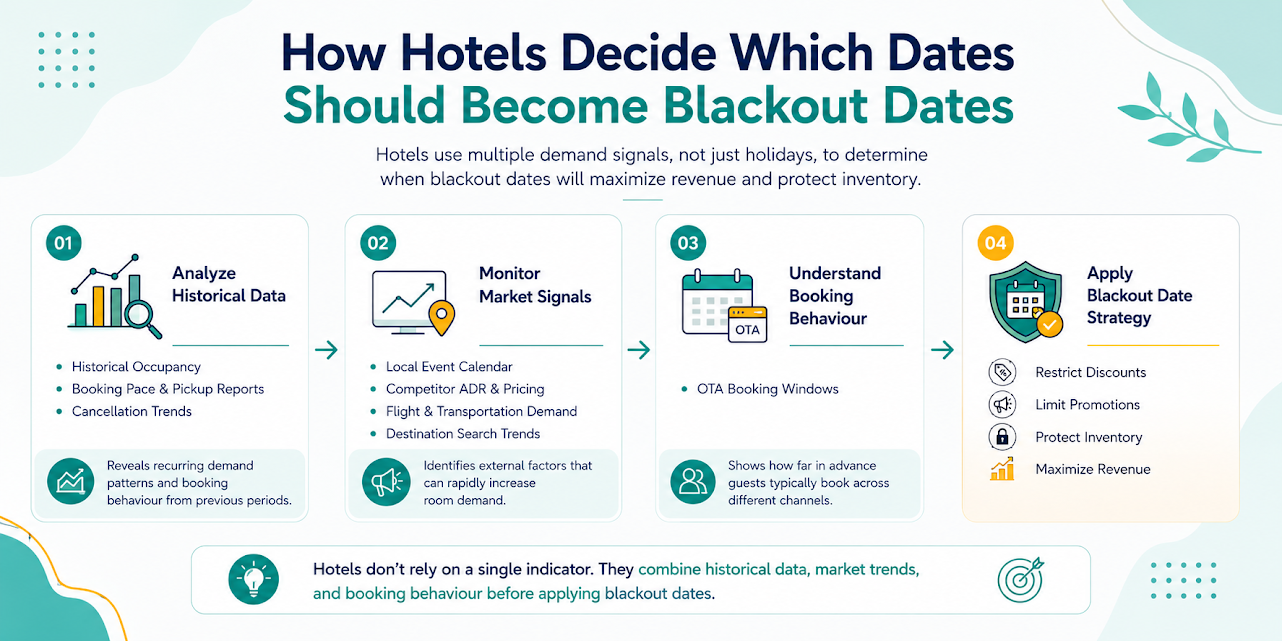
Image: This infographic illustrates the four-step process hotels use to determine whether specific dates should become blackout dates. It shows how revenue teams evaluate historical performance, monitor market signals, analyze booking behavior, and then apply blackout strategies to protect inventory and maximize revenue.
Real-World Examples of Hotel Blackout Dates
Hotels apply blackout dates whenever demand is expected to significantly exceed normal booking patterns. Although the reasons vary by property and location, blackout dates are most commonly used during festivals, citywide events, peak travel seasons, and major conferences.
- Goa – New Year’s Eve: Resorts often restrict discounted rates and promotional offers because demand consistently reaches its annual peak.
- Sunburn Festival (Goa): Hotels near the festival venue experience a surge in bookings from domestic and international travelers, making blackout dates an effective revenue management strategy.
- Indian Premier League (IPL): Hotels in host cities see increased demand from fans, teams, sponsors, broadcasters, and event staff during the tournament.
- Kumbh Mela: Pilgrimage destinations experience a massive influx of visitors, prompting hotels to protect inventory and prioritize higher-value bookings.
- Diwali & Major Festivals: Leisure destinations often limit promotional offers as domestic travel demand rises significantly.
- Destination Wedding Season: Hotels in destinations such as Jaipur, Udaipur, and Goa frequently reserve large room blocks for wedding guests and private events.
- Char Dham Yatra: Hotels along the pilgrimage route experience predictable seasonal occupancy spikes during the yatra.
- Super Bowl (USA): Hotels in the host city experience exceptionally high demand from spectators, sponsors, and media.
- Olympic Games: Properties often implement blackout dates months in advance because of sustained international demand.
- Formula 1 Grand Prix: Cities hosting Formula 1 races typically experience sharp increases in occupancy and room rates.
- Coachella: Hotels surrounding the festival venue restrict discounted bookings during one of the busiest weekends of the year.
- Oktoberfest: Munich hotels use blackout dates throughout the festival to maximize revenue during exceptionally high visitor demand.
Blackout Dates vs Other Hotel Revenue Management Restrictions
Blackout dates are one of several tools hotels use to manage demand and maximize revenue. While they all influence bookings, each serves a different purpose.
| Revenue Management Strategy | Primary Purpose | How It Differs from Blackout Dates |
| Blackout Dates | Restrict selected bookings, discounts, or room availability during periods of high demand to protect inventory and maximize revenue. | — |
| Minimum Length of Stay (MinLOS) | Requires guests to book a minimum number of consecutive nights to increase revenue per reservation and reduce room turnover. | Focuses on stay duration rather than restricting bookings or promotions. |
| Closed to Arrival (CTA) | Prevents guests from checking in on specific dates while allowing existing stays to continue. | Restricts arrival dates instead of limiting room availability or discounts. |
| Closed to Departure (CTD) | Prevents guests from checking out on selected dates to encourage longer stays during peak demand. | Controls departure dates rather than restricting new bookings. |
| Dynamic Pricing | Adjusts room rates in real time based on demand, occupancy, seasonality, and market conditions. | Changes pricing instead of restricting bookings or inventory. |
| Rate Fences | Creates different pricing tiers based on booking conditions such as advance purchase, refundability, or guest eligibility. | Segments guests through pricing rules instead of restricting availability. |
| Inventory Controls | Allocates room inventory across booking channels or guest segments to maximize occupancy and profitability. | Manages where rooms are sold rather than when guests can book. |
How Blackout Dates Impact Hotel Revenue, ADR & RevPAR
Blackout dates influence far more than room availability. When used strategically, they can strengthen several key hotel performance metrics by ensuring high-demand inventory is sold under the most profitable conditions.
- Average Daily Rate (ADR): By limiting discounted rates and promotions during periods of high demand, hotels can sell more rooms at higher average prices.
- Revenue per Available Room (RevPAR): Higher room rates combined with strong occupancy often increase RevPAR, making blackout dates an effective revenue optimization tool.
- Occupancy: While blackout dates may reduce bookings from price-sensitive travelers, they help maintain healthy occupancy by prioritizing guests willing to pay market rates.
- Length of Stay (LOS): Hotels often combine blackout dates with minimum length of stay restrictions to encourage longer bookings during peak periods and maximize revenue per reservation.
- Direct Bookings: Restricting discounts on third-party channels can encourage guests to book directly through the hotel’s website, reducing OTA commission costs.
- Distribution Efficiency: Blackout dates help hotels allocate limited inventory to the most profitable booking channels and guest segments instead of offering unrestricted availability everywhere.
Example: A hotel expecting 95% occupancy during a major festival may disable promotional rates and OTA discounts for those dates. Instead of filling rooms at discounted prices, it can sell the same inventory at full rates, increasing ADR and RevPAR while generating higher total revenue.
Hotel Blackout Dates Best Practices
Blackout dates are most effective when accurate data, clear communication, and the right technology back them. Following these best practices can help hotels maximize revenue while minimizing booking errors and guest dissatisfaction.
- Base blackout dates on demand forecasts, not assumptions: Use historical occupancy, booking pace, local events, and market trends to identify periods where restrictions are likely to maximize revenue.
- Communicate blackout policies clearly: Display restrictions on your website, booking engine, and reservation confirmations so guests understand any limitations before booking.
- Keep OTA availability synchronized: Ensure blackout dates are applied consistently across all connected OTAs to prevent booking inconsistencies and overbookings.
- Align direct booking channels: Update your website and booking engine alongside OTAs so guests receive the same availability and rate information regardless of where they book.
- Integrate your PMS and channel manager: Connecting your PMS with a channel manager ensures blackout rules, inventory, and reservations stay synchronized across all distribution channels.
- Automate updates wherever possible: Manual updates increase the risk of errors, especially during high-demand periods. Automation helps maintain real-time inventory accuracy across channels.
- Review blackout dates regularly: Demand can change quickly due to new events, cancellations, or shifting travel trends. Reassess blackout periods periodically to ensure they still align with market conditions.
- Document blackout policies for hotel teams: Ensure reservations, front office, and revenue teams understand when blackout dates apply, how they work, and how to communicate them consistently to guests.
Hotel Blackout Date Planning Checklist
Before implementing blackout dates, use this checklist to ensure your strategy is based on demand data, aligned across booking channels, and ready for execution.
- Review historical occupancy trends
- Analyze booking pace and pickup reports
- Check local events, holidays, and demand forecasts
- Monitor competitor pricing and market conditions
- Decide which room types or booking channels require restrictions
- Update OTAs and your direct booking engine simultaneously
- Communicate blackout policies internally
- Monitor performance and adjust restrictions if demand changes
Common Mistakes Hotels Make with Blackout Dates (and How to Avoid Them)
Even a well-planned blackout strategy can backfire if it’s not managed correctly. Avoiding these common mistakes can help hotels protect revenue, improve guest experience, and maintain accurate inventory across every booking channel.
1. Blocking too much inventory:
Applying blackout dates too broadly can reduce occupancy if demand falls short of expectations.
How to avoid it: Base blackout decisions on historical booking data, demand forecasts, and market trends instead of assumptions.
2. Forgetting to synchronize OTAs:
Inconsistent blackout dates across booking channels can lead to overbookings, inventory mismatches, and guest dissatisfaction.
How to avoid it: Use a channel manager to automatically sync availability and restrictions across all connected OTAs.
3. Not reviewing blackout dates regularly:
Demand can change quickly due to new events, cancellations, or shifting travel patterns, making previously planned blackout dates less effective.
How to avoid it: Review and adjust blackout rules regularly using real-time booking pace and market data.
4. Poor communication with guests:
Guests may become frustrated if blackout restrictions or unavailable promotional rates aren’t clearly communicated during the booking process.
How to avoid it: Display blackout policies clearly on your website, booking engine and booking confirmations.
5. Ignoring competitor pricing and market conditions:
Setting blackout dates without monitoring the market can result in missed revenue opportunities or uncompetitive pricing.
How to avoid it: Monitor competitor rates, local events, and demand trends before finalizing blackout periods.
6. Overusing blackout restrictions:
Frequent blackout dates can limit booking flexibility, reduce the effectiveness of promotions, and discourage repeat guests.
How to avoid it: Reserve blackout dates for periods of genuinely high demand and rely on dynamic pricing for less critical periods.
7. Lack of coordination between hotel teams:
Inconsistent information from reservations, front office, and revenue teams can confuse guests and create operational issues.
How to avoid it: Document blackout policies and ensure all teams follow the same procedures and communication guidelines.

Manage All Your OTAs from One Place
Request a DemoHow AxisRooms Helps Hotels Plan Blackout Dates More Effectively
Planning blackout dates manually can become challenging as demand fluctuates and bookings arrive from multiple channels. Hotels need real-time visibility into occupancy, synchronized inventory, and accurate market insights to apply blackout strategies without creating operational issues.
AxisRooms brings together the tools hotels need to plan, manage, and execute blackout dates more efficiently through one connected hospitality technology ecosystem.
- Channel Manager: Update availability, restrictions, and inventory across multiple OTAs from a single dashboard, helping maintain consistency during high-demand periods.
- Revenue Management Services: Make informed blackout decisions using demand forecasts, booking pace, historical performance, and market insights to maximize revenue opportunities.
- 100+ OTA Integrations: Keep inventory, rates, and blackout rules synchronized across leading booking channels, reducing the risk of overbookings and availability mismatches.
- PMS Integrations: Connect reservations, inventory, and operational data so blackout dates reflect real-time occupancy and booking activity.
- Web Booking Engine: Maintain accurate availability and booking rules on your direct booking website, ensuring guests receive the same information as they do on OTAs while encouraging commission-free bookings.
- Payment Gateways: Support a smooth and secure booking experience during peak demand periods with integrated online payment options.
By combining distribution, revenue management, reservations, and direct booking capabilities in one platform, AxisRooms helps hotels implement blackout date strategies with greater accuracy, operational efficiency, and confidence.
Conclusion
Blackout dates are more than temporary booking restrictions; they’re a strategic revenue management tool that helps hotels protect high-demand inventory, maintain pricing power, and sell the right room through the right channel at the right time. When supported by accurate demand forecasts, clear policies, and connected hotel technology, they become an integral part of a profitable distribution strategy rather than a reactive measure.
Whether you’re preparing for peak travel seasons, major events, or unexpected demand surges, reviewing and managing blackout dates proactively can help you make smarter commercial decisions with confidence.
Book a free demo today and discover how AxisRooms helps hotels simplify distribution, optimize revenue, and manage blackout dates more effectively.