
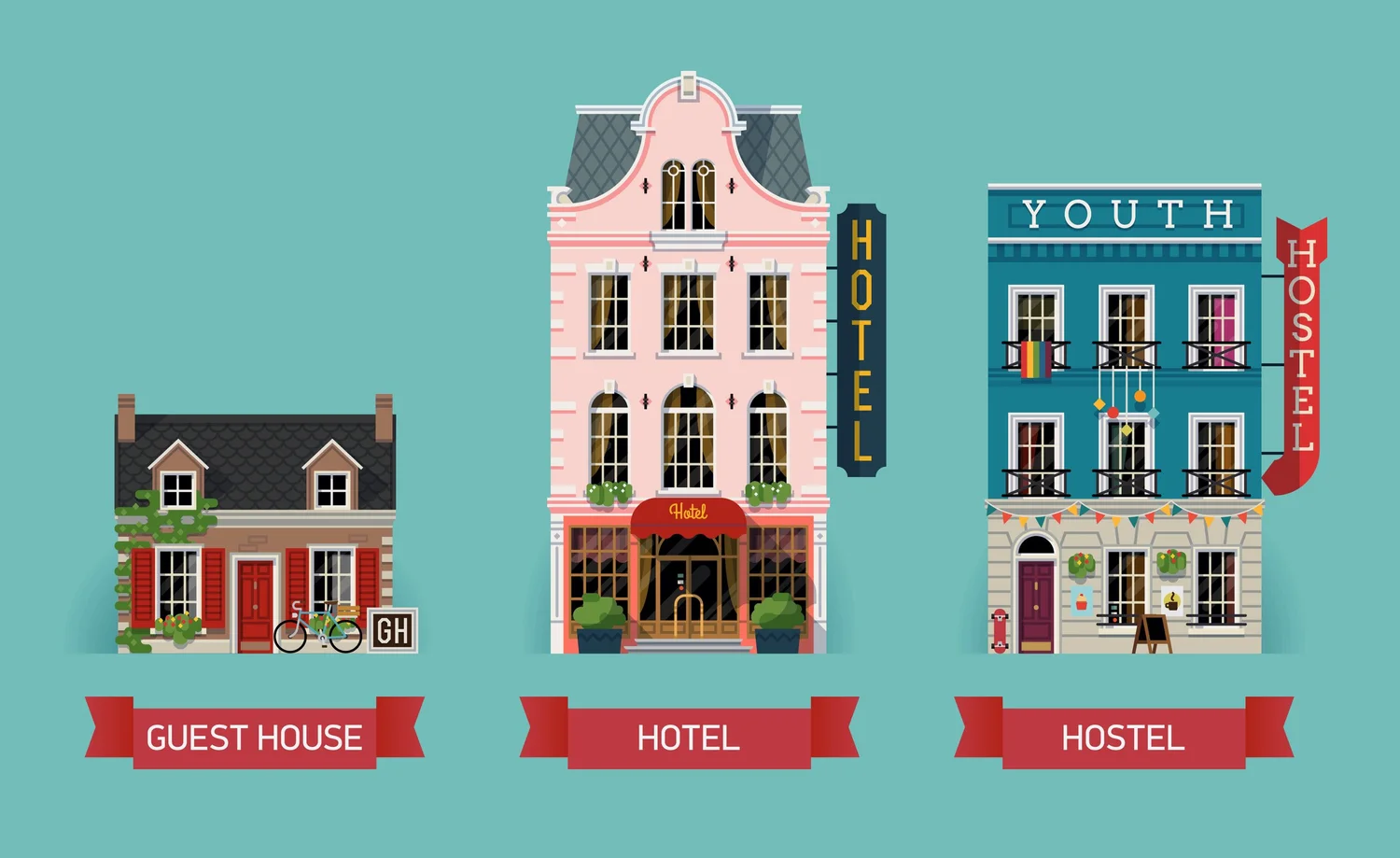
Choosing where to stay has become more complicated than ever. Beyond traditional hotels, today’s travellers can pick from hostels, capsule hotels, and guesthouses, each offering a distinct experience at different price points. Yet, many people still struggle to understand the hostel vs hotel debate or how these accommodation types compare in terms of privacy, amenities, cost, and overall travel experience.
Whether you’re planning a backpacking trip, a family vacation, a business stay, or even exploring accommodation business opportunities, knowing the differences can help you make a smarter decision.
In this guide, we’ll compare hostels, hotels, capsule hotels, and guesthouses to help you choose the option that best fits your travel style, budget, or business goals.
What Is a Hostel?
A hostel is a budget-friendly accommodation that offers shared living spaces and affordable lodging for travellers. While dormitory-style rooms are the defining feature of hostels, many modern properties also offer private rooms for guests who want more privacy without sacrificing the social atmosphere.
Accommodation typically includes shared dorms with bunk beds, alongside private rooms in some hostels. Guests usually share facilities such as bathrooms, kitchens, lounges, laundry areas, and coworking spaces, making hostels both economical and community-oriented.
Unlike traditional accommodation, hostels encourage interaction among guests through communal spaces, organised events, and group activities. This social environment makes it easy to meet fellow travellers, exchange tips, and explore destinations together.
Common guests include:
- Backpackers
- Solo travellers
- Digital nomads
- Students
- Budget-conscious travellers
What Is a Hotel?
A hotel is a commercial accommodation that provides private rooms and a range of services designed to offer comfort, convenience, and privacy. Hotels cater to different budgets and travel needs, from economy properties to luxury five-star establishments.
Most hotels offer private rooms or suites with en-suite bathrooms, while larger properties may feature multiple room categories to suit different guest preferences. Depending on the hotel, guests can also access facilities such as restaurants, swimming pools, fitness centres, meeting rooms, spas, and business centres.
Unlike hostels or guesthouses, hotels focus on delivering a full-service experience. Services such as daily housekeeping, room service, concierge assistance, and 24-hour front desk support are standard across many properties.
Common guests include:
- Business travellers
- Families
- Couples
- Leisure travellers
- Luxury travellers
What Is a Capsule Hotel?
A capsule hotel is a compact accommodation that provides individual sleeping pods instead of conventional hotel rooms. First introduced in Japan, capsule hotels were designed to maximise space while offering travellers an affordable and private place to rest.
Each capsule typically contains a bed, lighting, charging points, ventilation, and basic storage for personal belongings. Bathrooms, lounges, lockers, and other facilities are usually shared among guests.
Rather than offering spacious accommodation or extensive amenities, capsule hotels focus on efficiency and convenience. Their space-saving design makes them particularly suitable for short overnight stays in busy urban areas.
Common guests include:
- Solo travellers
- Business commuters
- Transit passengers
- Budget travellers
- Short-stay visitors
What Is a Guesthouse?
A guesthouse is a small, independently owned accommodation that provides a more personal and home-like experience than a traditional hotel. Many guesthouses are family-run, allowing guests to enjoy local hospitality and a more relaxed atmosphere.
Accommodation usually consists of private rooms within a residential-style property, although some guesthouses also offer family rooms or small apartments. Facilities are generally simpler than those found in hotels and may include shared dining areas, gardens, terraces, or living spaces.
Instead of focusing on extensive services or luxury amenities, guesthouses emphasise personalised hospitality, local recommendations, and a welcoming environment that reflects the destination’s culture and character.
Common guests include:
- Couples
- Families
- Leisure travellers
- Cultural explorers
- Long-stay travellers seeking a local experience
Hostel vs Hotel vs Capsule Hotel vs Guesthouse: Key Differences at a Glance
Hotels, hostels, capsule hotels, and guesthouses differ primarily in the type of experience they offer. Hotels focus on comfort and full-service amenities, hostels prioritise affordability and social interaction, capsule hotels maximise space for short stays, while guesthouses provide a more personal, home-like atmosphere.
The right choice depends on your budget, privacy preferences, travel purpose, and the experience you’re looking for.
| Attribute | Hostel | Hotel | Capsule Hotel | Guesthouse |
| Accommodation style | Shared dormitories and private rooms | Private rooms and suites | Individual sleeping pods | Home-style private rooms |
| Privacy | Low to medium | High | Medium | Medium to high |
| Price | Lowest | Highest | Low to medium | Low to medium |
| Comfort level | Basic | High | Compact but comfortable | Comfortable and homely |
| Service level | Limited or self-service | Full-service | Limited | Personalised hospitality |
| Amenities | Shared kitchens, lounges, laundry | Restaurants, pools, gyms, room service, concierge | Shared bathrooms, lockers, basic facilities | Breakfast, gardens, common areas, local recommendations |
| Social atmosphere | Very high | Low | Low | Moderate |
| Typical stay duration | Short to medium stays | Short to long stays | Mostly overnight or short stays | Short to medium stays |
| Best suited for | Backpackers, solo travellers, digital nomads | Families, couples, business and luxury travellers | Transit passengers, business commuters, solo travellers | Couples, families, leisure travellers, cultural explorers |
Hostel vs Hotel: What’s the Difference?
The biggest difference between a hostel and a hotel is the experience they offer. Hostels focus on affordable, community-oriented accommodation, while hotels prioritise privacy, comfort, and a wider range of guest services.
If your priority is keeping accommodation costs low and connecting with fellow travellers, a hostel is often the better choice. Hotels, on the other hand, are designed for guests who value private rooms, consistent service, and amenities such as housekeeping, on-site dining, and business or leisure facilities. While both cater to different budgets, hotels generally provide a more comprehensive hospitality experience.
Ultimately, a hostel is best suited to budget-conscious and social travellers, whereas a hotel is ideal for those seeking greater comfort, convenience, and privacy.
Hostel vs Capsule Hotel: What’s the Difference?
Although both are popular budget accommodation options, hostels and capsule hotels are designed for different types of travel. Hostels encourage social interaction through shared spaces, while capsule hotels focus on providing a compact, private place to sleep.
Travellers staying in a hostel often spend time in communal lounges, kitchens, or coworking spaces, making it easier to meet other guests. Capsule hotels, by contrast, offer individual sleeping pods with limited personal space and shared facilities, making them more suitable for short overnight stays or transit travellers who prioritise convenience over social experiences.
Choose a hostel if you want an affordable stay with a vibrant community, or a capsule hotel if you simply need a clean, efficient place to rest before continuing your journey.
Guesthouse vs Hotel: What’s the Difference?
The main difference between a guesthouse and a hotel lies in the style of hospitality they provide. Guesthouses offer a more personal, home-like stay, while hotels deliver a standardised experience supported by a broader range of facilities and services.
Many guesthouses are independently or family-run, allowing travellers to enjoy local hospitality in a relaxed setting. Hotels typically operate on a larger scale and provide additional amenities such as restaurants, fitness centres, meeting spaces, and concierge services, making them suitable for a wider variety of travel needs.
A guesthouse is often the better choice if you value personalised service and a local atmosphere, whereas a hotel is ideal when convenience, consistency, and extensive amenities are your priorities.
Guesthouse vs Hostel: What’s the Difference?
Guesthouses and hostels are both affordable alternatives to hotels, but they appeal to different travel styles. Guesthouses focus on comfort, privacy, and personalised hospitality, while hostels are built around affordability and a shared social experience.
Guests staying in a guesthouse typically enjoy private rooms in a quieter setting, making them well suited to couples, families, and leisure travellers. Hostels, in contrast, often feature shared dormitories and communal spaces that encourage interaction among backpackers, solo travellers, and digital nomads.
If you prefer a peaceful, home-like stay with greater privacy, a guesthouse is usually the better option. A hostel is a better fit if you’re travelling on a budget and want to meet other travellers along the way.
Hostel vs Hotel Price Comparison
One of the biggest differences between a hostel and a hotel is the cost of accommodation. Hostels are generally the most affordable option, while hotels span a much wider price range depending on their category and amenities. However, travellers often compare guesthouses and capsule hotels as well when deciding where to stay.
The table below provides indicative nightly rates for all four accommodation types across popular travel regions.
| Accommodation Type | India
(per night) |
Europe (per night) | Southeast Asia (per night) | Typical Privacy |
| Hostel (shared dorm bed) | ₹500–₹1,800 | €18–€45 | ₹400–₹1,500 | Low to Medium |
| Capsule Hotel | ₹1,000–₹3,000 | €35–€80 | ₹800–₹2,500 | Medium |
| Guesthouse / B&B | ₹1,500–₹4,500 | €50–€130 | ₹1,200–₹3,500 | Medium to High |
| Hotel (budget–mid-range) | ₹2,500–₹12,000 | €80–€250 | ₹2,000–₹9,000 | High |
* Indicative prices only. Actual rates vary by destination, season, property category, and booking platform.
When comparing accommodation costs, keep these factors in mind:
- Season: Peak holiday periods, festivals, and major events can significantly increase room rates.
- Destination: Popular tourist cities and prime locations are generally more expensive than smaller towns.
- Room type: Shared dorm beds are the most affordable, while private rooms, suites, and premium accommodation cost more.
- Booking channel: Prices may vary between direct bookings, OTAs, and last-minute reservations based on promotions and demand.
Hostel prices in the table refer to shared dorm beds, while private hostel rooms often cost closer to guesthouses or budget hotels. Similarly, capsule hotels remain a niche accommodation type in many destinations, so availability and pricing can vary by city.
Accommodation Trends in India
India’s accommodation landscape is evolving as traveller preferences shift towards affordable, experience-driven, and flexible stays. While traditional hotels continue to dominate the market, newer accommodation formats are expanding rapidly to cater to changing travel behaviour.
- Rise of backpacker hostels: Hostel chains and independent backpacker properties are expanding across popular tourist destinations such as Goa, Rishikesh, Jaipur, and Himachal Pradesh, driven by growing demand from solo travellers, digital nomads, and budget-conscious tourists.
- Capsule hotels are emerging in metro cities: Although still a niche segment, capsule hotels are gradually appearing in cities like Mumbai, Bengaluru, and Delhi, particularly near airports, railway stations, and business districts where short-stay demand is strong.
- Boutique guesthouses are gaining popularity: Many travellers now prefer smaller, locally owned properties that offer personalised hospitality, unique design, and authentic local experiences over standard accommodation.
- Domestic tourism continues to fuel growth: Rising disposable incomes, improved connectivity, and government initiatives promoting domestic travel have increased demand across hotels, hostels, guesthouses, and other alternative accommodation options.
- Hybrid accommodation models are becoming more common: Many properties now combine multiple concepts, for example, hostels with private rooms, hotels featuring coworking spaces, or guesthouses offering hotel-style amenities to appeal to a wider range of guests.
Which Accommodation Business Model Is Best for Property Owners?
The best accommodation business model depends on your target guests, location, investment budget, and operational goals. While each option serves a different segment of travellers, choosing the right model can improve occupancy, profitability, and long-term business sustainability.
- Choose a hostel if you want to maximise occupancy by targeting backpackers, students, solo travellers, and digital nomads. Hostels work best in destinations with strong budget travel demand and where shared accommodation is widely accepted.
- Choose a hotel if you’re building a full-service hospitality business that caters to families, business travellers, and premium guests. Hotels typically require a higher investment but offer broader revenue opportunities through room categories and guest services.
- Choose a capsule hotel if your property is located in a high-footfall urban area such as an airport, railway station, or business district. Capsule hotels are best suited to short-stay and transit travellers seeking affordable privacy.
- Choose a guesthouse if you prefer operating a smaller property with personalised service and a home-like atmosphere. Guesthouses often perform well in leisure destinations where travellers value local experiences over extensive facilities.
Ultimately, the most successful accommodation businesses are those that align their offering with local demand, guest expectations, and the property’s unique strengths.
Note: If you’re comparing these business models from an investment and operational perspective, the table below highlights their key differences.
| Factor | Hostel | Hotel | Capsule Hotel | Guesthouse |
| Startup Cost | Low to medium | Medium to high | Medium | Low to medium |
| Revenue Potential | Medium to high | High | Medium | Medium |
| ADR Opportunity | Low to medium | Medium to high | Medium | Medium |
| Occupancy Trends | High in backpacker and tourist destinations | Stable across business and leisure markets | Strong in transit and metro locations | Seasonal, depending on destination |
| Staffing Requirements | Low to medium | Medium to high | Low to medium | Low to medium |
| Operational Complexity | Medium | High | Medium | Low to medium |
| Scalability | Moderate | High | Moderate | Limited to moderate |
Hotels offer high revenue potential and scalability but need significant investment and expertise. Hostels and guesthouses are more affordable to start, appealing to independent operators. Capsule hotels fit between the two, thriving in locations with steady short-stay demand.
Which Accommodation Model Works Best by Location?
The success of an accommodation business depends not only on the property type but also on where it operates. Matching your business model to local demand and traveller behaviour can significantly improve occupancy and long-term profitability.
- Tourist destinations: Hostels and guesthouses perform well in leisure markets where travellers prioritise affordability, local experiences, and longer stays.
- Business cities: Hotels are typically the strongest choice, supported by steady demand from corporate travellers, conferences, and business events.
- Pilgrimage towns: Budget hotels and guesthouses often attract families and religious travellers seeking affordable, private accommodation close to places of worship.
- Heritage locations: Boutique guesthouses and heritage hotels appeal to travellers looking for authentic cultural experiences and personalised hospitality.
- Airport areas: Capsule hotels and business hotels are well suited to transit passengers, airline crews, and travellers needing convenient overnight accommodation.
- Existing hotels: Adding hostel-style dormitories, coworking spaces, or extended-stay room categories can help attract new guest segments and diversify revenue streams.
- New investors: Hostels and guesthouses generally require lower upfront investment, while hotels are better suited to investors with larger budgets and long-term expansion plans.
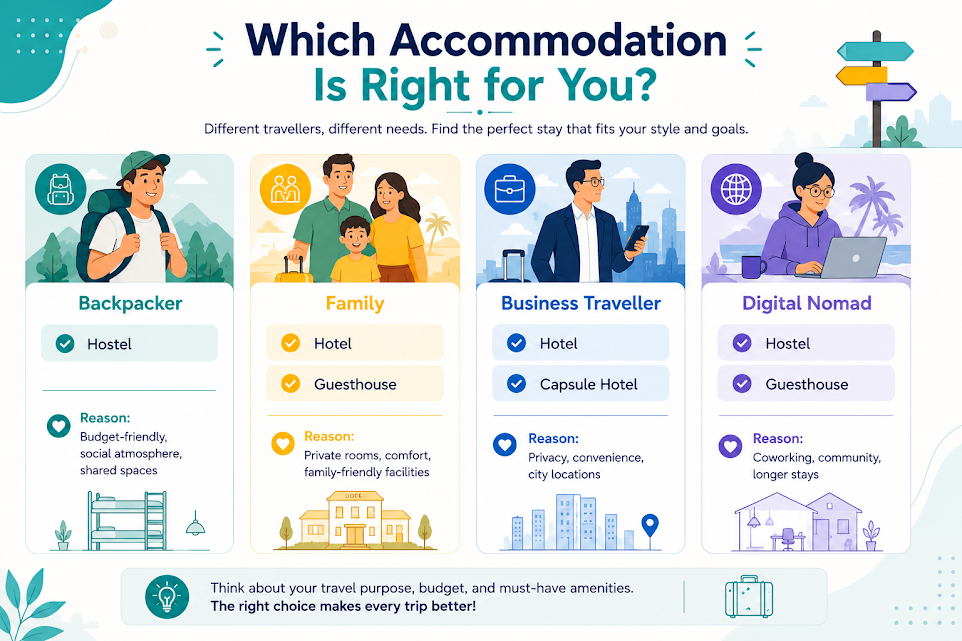
Image: Comparison of the accommodation types best suited for different traveller profiles, illustrating how factors such as budget, privacy, comfort, convenience, social interaction, and length of stay influence the ideal choice for backpackers, families, business travellers, and digital nomads.
What Software Does Each Accommodation Type Need?
Regardless of whether you operate a hotel, hostel, guesthouse, or capsule hotel, the right technology stack is essential for managing reservations, distribution, and guest payments. While the core software remains largely the same, some accommodation types require more advanced revenue management and operational tools than others.
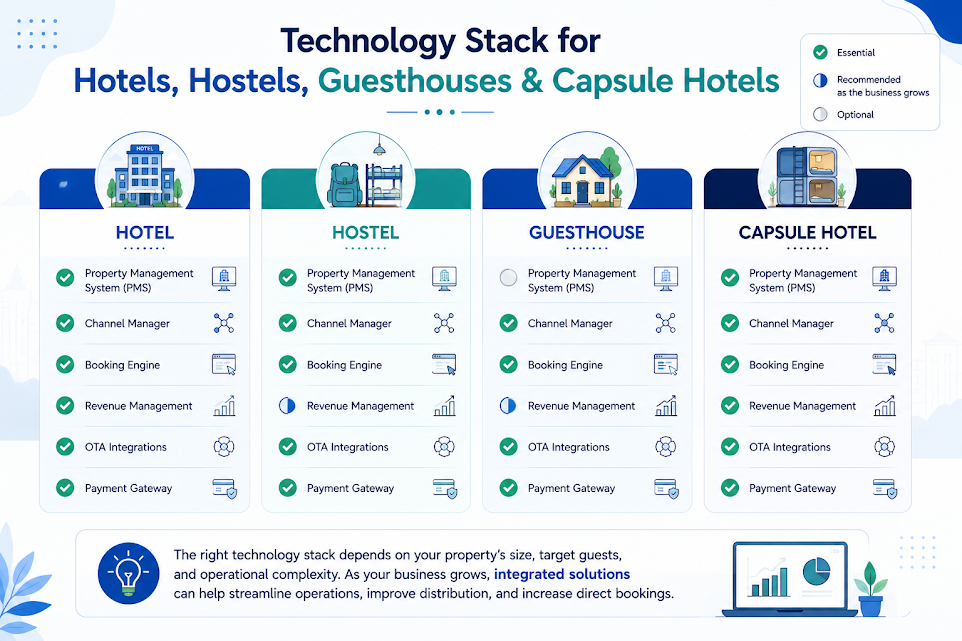
Although hotels, hostels, guesthouses, and capsule hotels serve different guest segments, they rely on many of the same technology solutions to streamline operations and increase revenue. The infographic above shows which systems are essential, recommended, or optional for each accommodation type.

Manage All Your OTAs from One Place
Request a DemoHow AxisRooms Helps Different Accommodation Providers Grow
The technology stack above forms the foundation of modern accommodation management. Rather than sourcing separate tools from multiple vendors, many hotels, hostels, guesthouses, and capsule hotels choose integrated platforms that connect distribution, reservations, pricing, and payments in one ecosystem.
AxisRooms helps accommodation providers manage distribution, automate routine tasks, and make smarter revenue decisions through an integrated hospitality platform.
- Channel Manager: Synchronize rates and availability across multiple booking channels in real time to reduce manual updates and prevent overbookings.
- Booking Engine: Increase commission-free direct bookings with a fast, mobile-friendly booking experience on your website.
- PMS Integrations: Connect front-office operations, reservations, and guest information for smoother day-to-day management.
- 100+ OTA Integrations: Distribute inventory across leading OTAs from a single dashboard while maintaining pricing consistency.
- Revenue Management Services: Make informed pricing decisions using demand trends, booking patterns, and market insights.
- Payment Gateways: Offer secure online payments and a smooth booking experience for guests.
Whether you’re running a boutique guesthouse, expanding a hostel chain, managing a business hotel, or launching a capsule hotel, AxisRooms provides the technology foundation to streamline operations, improve visibility, and support sustainable revenue growth.
Conclusion
Choosing between a hostel, hotel, capsule hotel, and guesthouse isn’t about finding a universally better option; it’s about finding the accommodation that best matches your travel needs. Budget, privacy, location, and the type of experience you want all play a role in making the right choice.
For accommodation providers, the decision goes beyond the property model itself. Long-term success depends on combining the right concept with the right technology to manage distribution, increase direct bookings, and maximise revenue efficiently.
No matter what type of accommodation you operate, investing in a connected hospitality technology stack can help you stay competitive in an increasingly digital travel market.
Ready to simplify operations with one connected platform? Book a free demo today and discover how AxisRooms can help you attract more bookings, simplify operations, and unlock sustainable revenue growth.