

Booking a hotel room online has never been easier, yet millions of travelers still end up paying more than they should simply because they book the wrong way. Choosing the wrong booking platform, overlooking hidden charges, or missing out on direct booking benefits can quickly turn what looks like a great deal into an expensive reservation.
Whether you’re booking through an online travel agency (OTA) or directly with a hotel’s website, knowing what to look for before you click “Confirm” can help you save money, avoid surprises, and book with confidence.
In this guide, we’ll walk you through how to book a hotel room online, compare direct booking with OTAs, identify the best time to book, and highlight the key things to check before confirming your reservation.
How to Book a Hotel Room Online: A Step-by-Step Guide
Booking a hotel room online takes only a few minutes when you follow the right process. These six steps will help you compare options, avoid hidden costs, and book your stay with confidence.
1. Choose Your Destination and Travel Dates
Start by deciding where you want to stay and when you’ll be traveling. Your destination, travel dates, and the number of guests directly influence room availability and pricing.
If your dates are flexible, compare rates across a few days. Hotel prices often fluctuate based on weekends, holidays, local events, and seasonal demand, so shifting your trip by even a day or two could result in significant savings.
2. Select Hotels That Match Your Needs
Once you’ve chosen your destination, narrow your options based on what matters most, not just the nightly rate.
Consider factors such as:
- Location and proximity to attractions or business districts
- Guest ratings and recent reviews
- Room size and amenities
- Breakfast, parking, or Wi-Fi inclusions
- Family-friendly or business-friendly facilities
Choosing the right hotel first makes it easier to evaluate booking options later without switching between multiple properties.
3. Evaluate Booking Channels Before You Reserve
Once you’ve shortlisted a hotel, compare prices and benefits across different booking channels. The same room may be available through the hotel’s website, an online travel agency (OTA), or a metasearch platform, each offering different prices, promotions, or booking conditions.
When comparing channels, look beyond the room rate and check for:
- Taxes and service charges
- Free cancellation policies
- Complimentary breakfast or upgrades
- Loyalty rewards or member discounts
- Payment options and special offers
Taking a few extra minutes to review a few booking channels can help you find better value rather than simply the lowest advertised price.
4. Read the Booking Policies Carefully
Before proceeding to payment, review the booking terms to avoid unexpected surprises.
Pay close attention to:
- Cancellation and refund policy
- Check-in and check-out times
- Early check-in or late check-out charges
- Child and extra bed policies
- Security deposit or prepayment requirements
Understanding these details before booking can prevent unnecessary fees and make your stay smoother.
5. Confirm Your Details and Complete the Payment
Double-check your travel dates, guest names, room type, and contact information before confirming your reservation. Once everything looks correct, complete the payment using a secure method and wait for your booking confirmation.
6. Save Your Booking Confirmation
After your reservation is confirmed, save the confirmation email or download the booking receipt. Keep the booking reference number handy, as you’ll often need it for check-in, modifications, or customer support.
If you’ve booked directly with the hotel, you can also contact the property a few days before arrival to reconfirm your reservation and request any special arrangements, such as airport transfers or an early check-in.
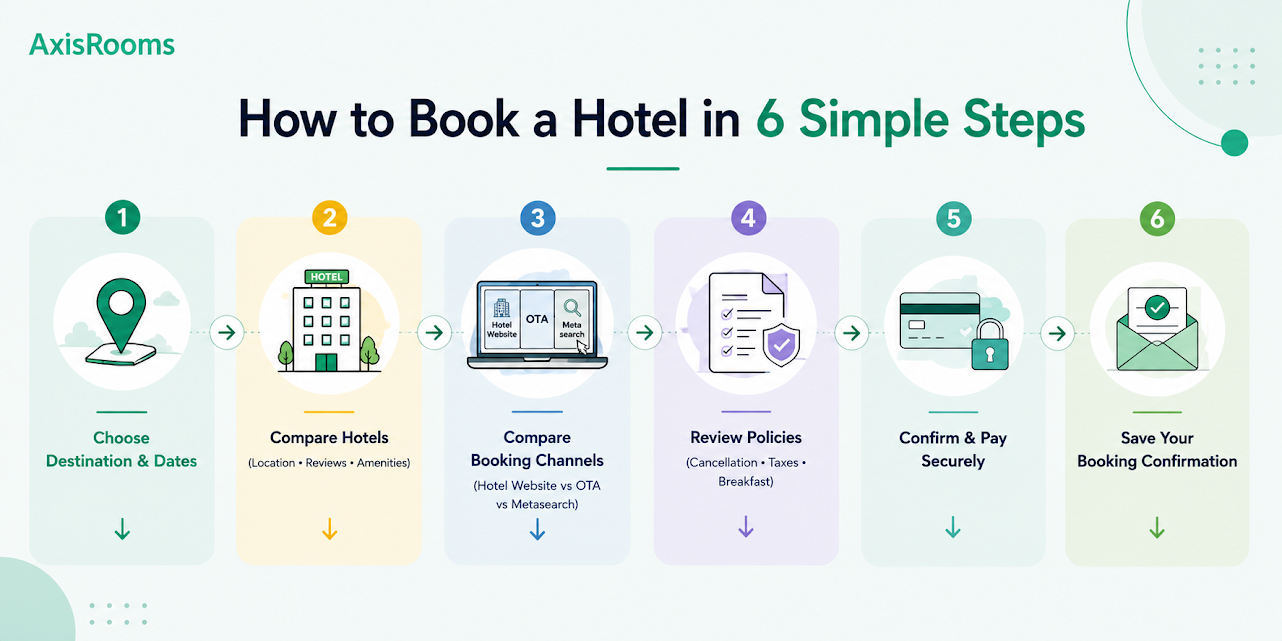
Image: Six-step hotel booking process illustrating the complete online reservation journey from choosing your
destination and comparing hotels to evaluating booking channels, reviewing booking policies, making a secure payment, and saving your booking confirmation.
Where Should You Book a Hotel? Direct Website vs OTA vs Metasearch
Where you book a hotel can affect more than just the price. Different booking methods offer varying rates, cancellation policies, loyalty benefits, and customer support. Understanding how each option works can help you choose the one that best fits your travel needs.
| Booking Method | Best For | Pros | Cons |
| Direct Hotel Website | Travelers seeking the best overall value | Exclusive offers, flexible cancellation, loyalty perks, and direct customer support | Requires comparing multiple hotel websites |
| Online Travel Agencies (OTAs) (e.g., Booking.com, Expedia) | Comparing many hotels in one place | Large hotel selection, easy price comparison, verified guest reviews | Prices may include commissions, and changes or cancellations may need to go through the OTA |
| Metasearch Platforms (e.g., Google Hotels, Trivago, Kayak) | Finding the best available price quickly | Compares rates across hotel websites and OTAs in one search | Redirects you to another website to complete the booking, and prices may change before checkout |
Book Directly Through the Hotel’s Website
Booking directly with a hotel’s website is often the best choice if you’ve already decided where you want to stay. Many hotels offer exclusive member discounts, complimentary breakfast, room upgrades, late check-out, or more flexible cancellation policies to encourage direct bookings.
Booking directly also makes it easier to communicate with the hotel about special requests, changes, or upgrades without involving a third party.
Book Through an Online Travel Agency (OTA)
OTAs such as Booking.com, Expedia, and Agoda let you compare hundreds of hotels, prices, amenities, and guest reviews in one place. They’re particularly useful when you’re still deciding where to stay or want to compare multiple properties within your budget.
However, while OTAs often feature competitive rates, changes, refunds, or cancellations usually need to be handled through the booking platform rather than directly with the hotel.
Use a Hotel Metasearch Platform
Metasearch platforms such as Google Hotels, Trivago, and Kayak don’t sell hotel rooms directly. Instead, they compare prices from hotel websites and OTAs, allowing you to see where the same room is available at the best rate.
Once you’ve chosen an offer, you’ll be redirected to the hotel’s website or the OTA to complete your reservation. Metasearch is an excellent starting point if your goal is to compare prices quickly before deciding where to book.
Which Booking Method Is Best?
There isn’t a single best option for every traveler; the right choice depends on what matters most to you.
- Choose a hotel’s website if you want exclusive perks, greater flexibility, and direct support.
- Choose an OTA if you’re comparing multiple hotels and value convenience.
- Use a metasearch platform if you want to compare prices across different booking channels before making a decision.
For many travelers, the smartest approach is to use a metasearch platform to compare prices, shortlist a hotel, and then check the hotel’s official website before making the final booking. This often helps you secure the best combination of price, benefits, and booking flexibility.
When Is the Best Time to Book a Hotel?
The best time to book a hotel depends on the type of property and your travel plans. Business hotels, luxury properties, and holiday resorts experience different booking patterns, so there’s no single booking window that guarantees the lowest price.
The table below provides a general guideline for when to book different types of hotels.
| Hotel Type | Ideal Booking Window |
| Business Hotels | 1–3 weeks before arrival, especially for weekday stays |
| Luxury Hotels | 1–3 months in advance to secure preferred room categories and promotional rates |
| Resorts | 2–6 months before travel, particularly during peak holiday seasons |
| Holiday Destinations | 2–4 months ahead for festivals, school vacations, and long weekends |
| Last-Minute Trips | 1–7 days before arrival, but availability and pricing can be unpredictable |
While these are useful benchmarks, hotel prices change constantly based on demand, occupancy, local events, and seasonality. Booking during a major festival, conference, or holiday period often means rooms sell out earlier and rates increase faster.
How to Find the Best Hotel Rates
Timing is important, but it isn’t the only factor that affects what you’ll pay. A few simple strategies can help you secure better value.
- Compare prices across hotel websites, OTAs, and metasearch platforms before booking.
- Book early for resorts and popular holiday destinations during peak seasons.
- Set price alerts if your travel dates are flexible.
- Check whether the hotel’s website offers exclusive discounts or complimentary perks.
- Avoid waiting until the last minute unless your travel plans are flexible and you’re comfortable with limited choices.
Ultimately, the best booking strategy combines the right timing with the right booking channel. Comparing rates a few weeks or months in advance, depending on the type of hotel, often delivers a better balance of price, room availability, and booking flexibility.
Tips on How to Save Money When Booking a Hotel
Saving money on a hotel isn’t about finding a single discount. Small decisions made throughout the booking process can significantly reduce your overall cost while helping you get greater overall value for the same stay.
Before You Start Searching
The biggest savings often happen before you even open a booking website. Choosing flexible travel dates, avoiding peak holiday periods, and deciding which amenities actually matter can significantly reduce your options to hotels that fit both your needs and your budget.
Rather than searching for the cheapest hotel, start with a realistic spending limit. This helps you compare properties more objectively and reduces the temptation to pay extra for features you may never use.
While Comparing Hotels
Once you’ve shortlisted a few properties, compare more than just the room rate. Check whether breakfast, Wi-Fi, parking, airport transfers, or resort fees are included, as these can change the true cost of your stay.
It’s also worth checking the hotel’s official website with OTAs and metasearch platforms. The lowest advertised price doesn’t always offer the best overall value.
Before You Pay
Before completing your reservation, review the total amount payable, including taxes and service charges. A room that initially appears cheaper may end up costing more once additional fees are added.
Take a moment to compare refundable and non-refundable rates as well. Paying slightly more for flexibility can save money if your travel plans change.
After You Book
Your booking doesn’t have to be the final step in saving money. If you’ve chosen a refundable rate, monitor prices before your stay, and you may be able to cancel and rebook at a lower price.
You can also contact the hotel directly to request complimentary upgrades or special amenities, particularly if you’re celebrating an occasion or staying for multiple nights.
9 Things to Check Before You Confirm Your Hotel Booking
Confirming a hotel booking takes only a few minutes, but overlooking important details can lead to unexpected costs, booking issues, or an unsatisfactory stay. Before you click “Confirm,” review these nine essentials.
1. Cancellation and Modification Policy
Plans can change unexpectedly. Check whether the booking is refundable, the cancellation deadline, and whether date changes or name changes are permitted.
2. The Total Price, Including Taxes
The advertised room rate isn’t always the final amount you’ll pay. Review the total price, including taxes, service charges, and mandatory fees, before completing your reservation.
3. What’s Included in the Room Rate
A cheaper room may not include breakfast, Wi-Fi, parking, or airport transfers. Compare the total value rather than focusing only on the nightly rate.
4. Resort Fees and Other Mandatory Charges
Some hotels charge mandatory resort fees, destination fees, or facility charges that aren’t obvious during your initial search. Make sure you know exactly what is included in the final price.
5. Room Occupancy and Extra Guest Policies
Check how many guests the room accommodates and whether children stay free. If you’re travelling with family or friends, verify extra bed charges and occupancy limits.
6. Early Check-in and Late Check-out Options
If your flight arrives early or departs late, check the hotel’s policies in advance. Some hotels offer complimentary flexibility, while others charge additional fees.
6. Recent Guest Reviews
Don’t rely only on the overall rating. Read recent reviews to understand recurring comments about cleanliness, service, noise levels, breakfast quality, and location.
8. Payment Terms
Confirm when your payment will be charged, whether a deposit is required, and which payment methods are accepted. This helps avoid surprises before arrival.
9. Hidden Charges
Look for additional costs such as parking, minibar usage, city taxes, pet fees, or charges for using hotel facilities. Understanding these upfront prevents your final bill from exceeding your budget.
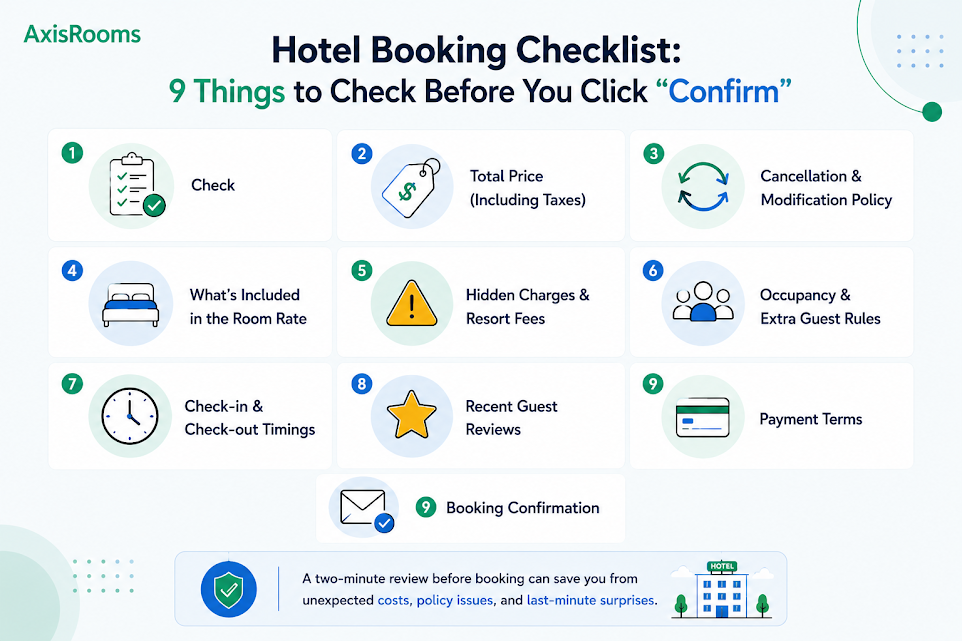
Image: A hotel booking checklist highlighting the nine essential things to check before confirming a reservation, including the total price, cancellation and modification policy, room inclusions, hidden charges, occupancy rules, check-in timings, guest reviews, payment terms, and booking confirmation.
Common Hotel Booking Mistakes Travelers Make and How to Avoid Them
Even experienced travelers can overlook small details that lead to unnecessary costs or inconvenience. Avoid these common hotel booking mistakes to ensure a smoother stay.
Booking a Non-Refundable Room by Mistake
Non-refundable rates are often cheaper, but they usually can’t be cancelled or modified without losing the full booking amount. Always confirm the cancellation policy before you pay.
Ignoring Taxes and Mandatory Fees
A room that looks affordable at first may cost significantly more once taxes, service charges, or resort fees are added. Compare the final payable amount, not just the advertised nightly rate.
Selecting the Wrong Travel Dates
Double-check your check-in and check-out dates before confirming. A simple date error can be expensive to correct, especially on non-refundable bookings.
Booking for the Wrong Number of Guests
A room booked for two people may not accommodate a third guest without additional charges. Verify occupancy limits and extra bed policies before completing your reservation.
Assuming Breakfast Is Included
Not every room rate includes breakfast. If this matters to you, check what’s included instead of assuming all bookings offer the same amenities.
Overlooking Guest Reviews
A high overall rating doesn’t tell the full story. Reading recent reviews can reveal recurring issues related to cleanliness, noise, service, or maintenance.
Missing the Booking Confirmation Email
Always confirm that you’ve received your reservation confirmation and booking reference. If it doesn’t arrive within a few minutes, check your spam folder or contact the hotel or booking platform.
Entering Incorrect Guest Details
Mistakes in guest names, email addresses, or phone numbers can create problems during check-in or prevent you from receiving important booking updates.
Booking Without Comparing Channels
Many travelers book through the first website they visit. Comparing the hotel’s official website with OTAs and metasearch platforms can reveal better prices, added benefits, or more flexible booking terms.
Hotel Booking Beyond the Basics
Not every hotel booking follows the standard online reservation process. Whether you need a room for a few hours, are booking as a young traveler, or want to contact a hotel directly, here’s how these common scenarios work.

Manage All Your OTAs from One Place
Request a DemoHow to Book a Day Room at a Hotel (Without an Overnight Stay)
A day room lets you use a hotel room for a few hours instead of booking an overnight stay. These bookings are popular with business travelers, transit passengers, and anyone looking for a place to rest between flights or meetings.
To book a day room:
- Check whether the hotel offers day-use rooms on its website.
- Search specialized day-stay platforms if available in your region.
- Call the hotel directly, as many properties accept day-use reservations even if they aren’t listed online.
- Confirm the check-in and check-out hours, as day rooms usually have fixed time slots rather than overnight timings.
How Old Do You Have to Be to Book a Hotel Room?
The minimum age to book a hotel room depends on the hotel’s policy and local regulations. In many countries, including India, most hotels require the primary guest to be at least 18 years old and to present a valid government-issued photo ID during check-in.
Some hotels may have higher age requirements or additional rules for unmarried couples, international travelers, or group bookings. Always check the property’s booking policy before making a reservation.
How to Write an Email for a Hotel Booking Request
Booking by email is useful when you need a custom quotation, want to reserve multiple rooms, or have special requests that aren’t available through an online booking engine.
Use a clear subject line and include your travel dates, room requirements, number of guests, and any special requests.
Sample hotel booking request email
Subject: Room Reservation Request for 12–14 September 2026
Dear Reservations Team,
I would like to book one Deluxe Room for two adults from 12 September to 14 September 2026. Please let me know your best available rate, whether breakfast is included, and your cancellation policy.
I would also appreciate an early check-in if available.
Thank you, and I look forward to your confirmation.
Kind regards,
[Your Name]
Booking a Hotel in India: Tips for Domestic and International Travelers
Booking a hotel in India is straightforward, but knowing a few local practices can make your trip smoother. Here are some things to keep in mind before you travel.
- Carry a valid photo ID: Indian travelers can usually check in using an Aadhaar Card, Driving Licence, Voter ID, or Passport. International guests should carry their passports and any required visa documentation.
- UPI is widely accepted: Most hotels accept UPI payments, along with credit and debit cards. International travelers should carry a card, as foreign-issued cards may not work everywhere.
- Ask for a GST invoice if you’re traveling for business: Hotels can issue GST-compliant invoices that simplify expense claims and reimbursements for corporate travelers.
- Book early during peak travel periods: Popular destinations fill up quickly during Diwali, Holi, Christmas, New Year, summer vacations, and long weekends, often leading to higher room rates.
- Compare both domestic and global OTAs: Check prices on MakeMyTrip, Goibibo, Booking.com, Agoda, and the hotel’s official website before confirming your reservation. You may find better rates or additional booking benefits.
Why Some Hotel Websites Make Booking Easier Than Others
Some hotel websites make booking feel effortless, while others create unnecessary friction. The difference isn’t just website design; it’s often the technology powering the reservation process. Behind most smooth hotel booking experiences is a modern booking engine connected to the hotel’s inventory, pricing, and payment systems.
A well-designed booking experience typically includes:
- Real-time availability: Guests see accurate room inventory and rates, reducing the chances of booking unavailable rooms.
- Instant booking confirmation: Reservations are confirmed immediately, giving travelers confidence that their room is secured.
- Fewer booking steps: A simple, intuitive booking flow reduces abandoned reservations and helps guests complete their booking quickly.
- Secure online payments: Trusted payment gateways support multiple payment methods while protecting guest information.
- Mobile-friendly booking: Since many travelers book on smartphones, responsive booking pages make it easy to reserve a room from any device.
- Clear cancellation policies: Transparent terms help guests understand their options before they complete the reservation.
- Relevant upselling opportunities: Hotels may offer room upgrades, breakfast packages, airport transfers, or late check-out during the booking process, allowing guests to personalize their stay without making the experience feel complicated.
For hotels, these features do more than improve convenience. A streamlined booking experience can increase direct bookings, reduce booking abandonment, and create a smoother journey from reservation to check-in.
For travelers, it means less time comparing options and greater confidence that their booking will be accurate and hassle-free.
How AxisRooms Helps Hotels Turn Website Visitors Into More Direct Bookings
Turning website visitors into confirmed guests requires more than an attractive website. Hotels also need technology that delivers a fast, reliable, and effortless booking experience from search to payment.
AxisRooms brings together the tools hotels need to simplify direct bookings while keeping operations connected.
- Web Booking Engine: Displays real-time room availability and rates, enabling guests to complete bookings with instant confirmation.
- Channel Manager: Synchronizes inventory and pricing across direct and third-party channels, reducing the risk of overbookings and rate inconsistencies.
- 100+ OTA Integrations: Connects hotels with leading online travel agencies while maintaining accurate availability across every booking channel.
- PMS Integrations: Keeps reservations, guest information, and room inventory synchronized, reducing manual work and improving operational efficiency.
- Payment Gateways: Supports secure online payments through multiple payment options, helping guests book with confidence.
- Revenue Management Services: Helps hotels make data-driven pricing decisions based on demand, market trends, and booking patterns to maximize direct booking opportunities.
By combining booking, distribution, payments, and property operations into a single connected ecosystem, AxisRooms helps hotels deliver a smoother booking experience for guests while improving day-to-day operational efficiency. Hotels can deliver the convenience travelers expect without relying solely on third-party booking channels.
Conclusion
Booking a hotel with confidence comes down to making informed decisions. Comparing booking channels, checking policies, understanding prices, and ensuring a hassle-free reservation experience can help travelers minimize booking issues and enjoy a smoother stay from the moment they click “Book.”
For hotels, delivering that same experience requires the right technology behind the scenes. A connected booking engine, real-time inventory, secure payments, and streamlined operations can make it easier to convert website visitors into direct bookings while improving the guest journey.
If you’re a hotel looking to create a better direct booking experience and reduce dependence on OTAs, book a free demo today to see how AxisRooms can help.